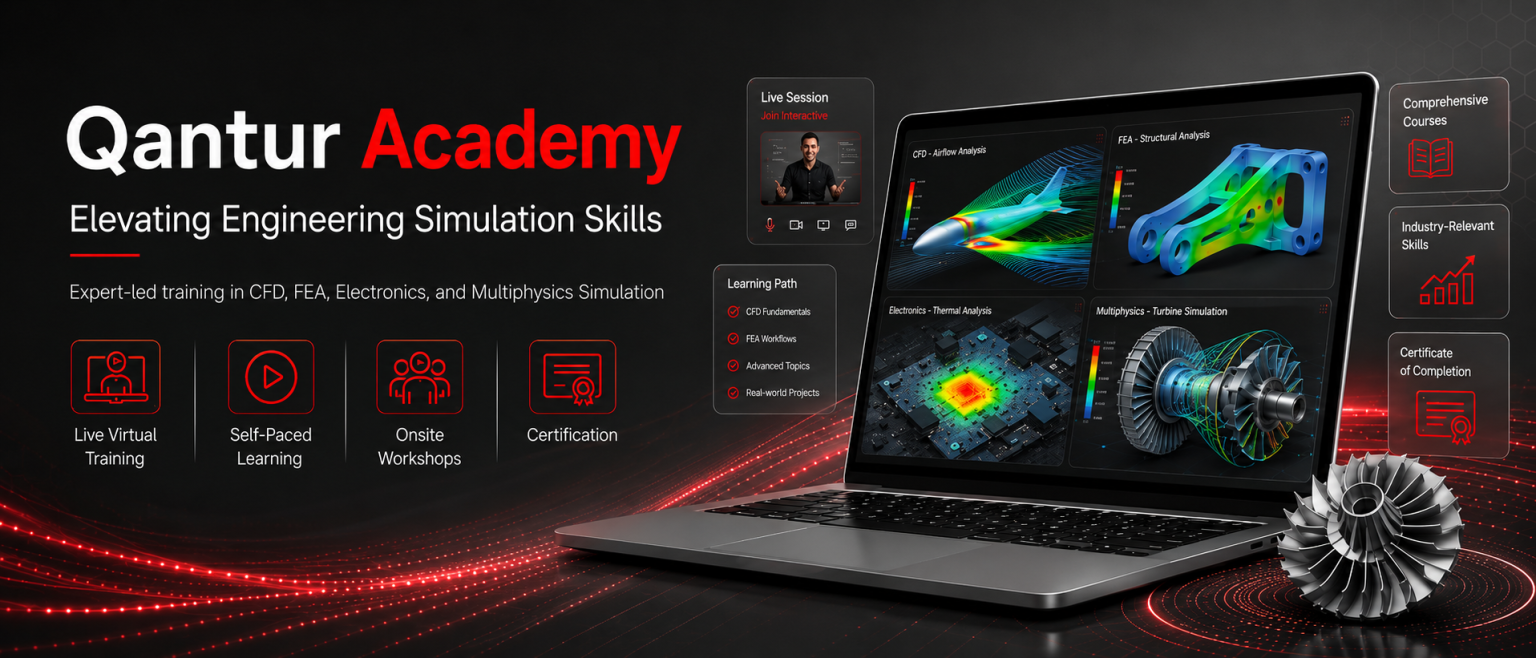
Many Indian engineering organizations start simulation with one software license and one engineer.
As adoption grows, simulation becomes an organizational capability rather than an individual engineering activity.
A mature CAE setup requires several elements working together.
- The Right Simulation Software
Software should match the engineering physics and applications being solved.
- Skilled Engineers
Teams require a combination of fundamental engineering knowledge, simulation methodology and software expertise.
- Structured Training
Training should progress from software fundamentals to advanced, application-specific workflows.
- Application Support
Teams need access to experts when they encounter unfamiliar physics, modelling challenges or solver issues.
- Compute Infrastructure
Larger CFD, structural, electromagnetic and optimization models may require workstation upgrades, HPC or cloud resources.
- Flexible Specialist Resources
Not every expertise needs to exist permanently in-house.
Services such as Qantur ExtendEdge can provide specialist FEA, CFD or multiphysics engineers when additional capacity is required.
- Internal Knowledge Management
Organizations should retain validated models, best practices, material data, modelling templates and lessons learned.
This combination of technology, people, training, support and infrastructure creates a much stronger simulation capability than software procurement alone.
The importance of this broader capability-building approach is also visible in DRDO’s DTTC structure, which combines modelling and simulation, HPC, training, skill development and technical support within the same technology ecosystem. DRDO