

Products
Overview
ADVANCED SAFETY & SECURITY High Level Features
Ansys safety & cybersecurity threat analysis software facilitates model-based safety analysis, safety concept creation, safety management and cybersecurity assessment for safety-critical electrical and electronic (E/E) and software (SW) controlled systems.
Using this software, engineers can deliver safe and secure products, reduce time to market, maximize profit margins and comply with standards like ISO 26262, IEC 61508, ARP 4754A/ARP 4761, ISO 21448 and ISO 21434.
Safety Analysis Products
Qantur Technologies is a pioneer engineering simulations company based in Gurgaon –India. We provides expert Computer Aided Engineering – CAE consulting services for engineering / product design analysis by modeling & simulation.
Ansys implements key safety analysis methods in one integrated tool. It supports the efficient and consistent execution of the analysis activities that are required by safety standards.
- Key safety analysis methods, all in one integrated tool
- Meets standards like ISO 26262, IEC 61508, ARP4761 and MIL-STD 882E
- Safety analysis based on system design with all-time consistency
- Quality analysis according to SAE J1739, VDA-AIAG FMEA Handbook, etc.
- Complete end-to-end traceability
- Integrated with partner and 3rd party tools for requirements management and system design
By acting as a central hub for gathering data, managing resources, planning and automating many process steps, Ansys enables a comprehensive view on safety.
- Tool Guided Safety Planning
- Assisted Reuse of Results
- Easy One-Click Safety Case
- Task Based Safety Plan Execution and Reviews
- KPI Monitoring and Reporting
Capabilities
Key Features
Easily handle the complexity of varied design environments with a range of analytical tools that enable you to meet performance goals and ensure long-term reliability.
Streamline and automate functional safety analysis
Streamline and automate functional safety analysis Functional safety standards, such as ISO 26262, are critical for ensuring that safety-critical electronic systems are reliably delivering consistent performance over time, without system failures. With Ansys medini analyze, the system functions are analyzed for potential hazards and a risk classification is completed. Subsequently, safety requirements are derived to implement appropriate countermeasures to mitigate the risks.
Systematic identification and consideration of SOTIF risks
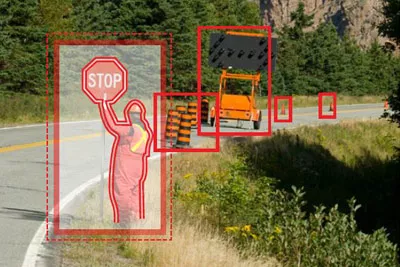
Systematic identification and consideration of SOTIF risks ISO 21448 “Road Vehicles – Safety of the Intended Functionality” (SOTIF) is a new standard that examines whether a system is sufficiently safe even in the absence of failures when hazards are caused by e.g. performance limitations of sensors or perception algorithms, unexpected changes in the road environment, etc. It enables engineering teams to avoid situations where vehicles are working as designed, but are falling short under real-world scenarios.

Ansys medini analyze enables the systematic identification of SOTIF risks in the hazard and risk analysis stage, as well as the consideration of design limitations and triggering conditions. Once these are identified, countermeasures can be planned to meet safety requirements. These measures and requirements are traced in Ansys medini analyze to the functional or architectural updates that are completed during the implementation of the system. Ansys medini analyze provides analysis methods like cause-effect-nets, System Weakness Analysis tables, and event trees, which make systematic analysis, understanding and elimination of SOTIF hazards possible.
This enables diverse teams — working to meet functional safety and SOTIF standards across system, electronics, embedded software, and other areas — to collaborate easily and more seamlessly.
Systematic cybersecurity threat analysis and risk assessment
Systematic cybersecurity threat analysis and risk assessment The key to ensuring the cybersecurity of systems is to systematically perform threat analyses and risk assessment across the entire electronics architecture. By identifying every possible means of cyberattack — and estimating both their impact and their feasibility — Ansys medini analyze protects against damaging threats.

This model-based, integrated tool provides end-to-end traceability, along with powerful collaboration, task management and reporting capabilities.
Assess the functional safety of semiconductors
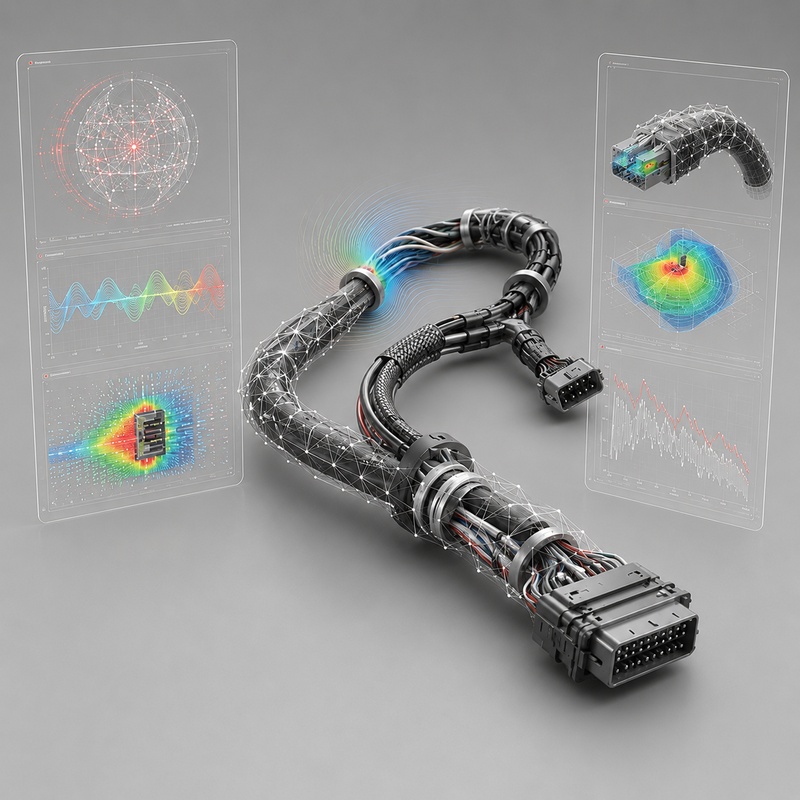
Assess the functional safety of semiconductors Safety analysts must look beneath the surface of semiconductors to assess all failure modes and determine how a flaw in a single chip could manifest itself in a product’s overall performance.
Digital Safety Management
Digital Safety Management Safety and engineering teams can get a comprehensive view of the entire safety planning process – beyond the individual project level. By replacing traditional point-tools, Ansys Digital Safety Manager defines safety plans, controls their execution, centralizes data and monitors outcomes. It helps to construct the safety case by providing efficient automations.

Ansys Digital Safety Manager recognizes and reflects the way safety teams work every day, not only internally but with their suppliers, assessors, and reviewers. It improves efficiency with traceability and standardization to enable systematic and consistent reuse of safety plans and work products.
Visioneering
Recent Events & Webinars
Discover how engineering simulation is expanding across the entire product lifecycles.
Introduction Mi tincidunt elit, id quisque ligula ac diam, amet. Vel etiam suspendisse morbi eleifend faucibus eget vestibulum felis. Dictum quis montes, sit sit. Tellus
Visioneering
Blogs & Trends
Discover how engineering simulation is expanding across the entire product lifecycle. engineering / product design analysis by modeling & simulation.

Introduction Mi tincidunt elit, id quisque ligula ac diam, amet. Vel etiam suspendisse morbi eleifend faucibus eget vestibulum felis. Dictum quis montes, sit sit. Tellus aliquam enim urna, etiam. Mauris
Introduction Mi tincidunt elit, id quisque ligula ac diam, amet. Vel etiam suspendisse morbi eleifend faucibus eget vestibulum felis. Dictum quis montes, sit sit. Tellus aliquam enim urna, etiam. Mauris
Introduction Mi tincidunt elit, id quisque ligula ac diam, amet. Vel etiam suspendisse morbi eleifend faucibus eget vestibulum felis. Dictum quis montes, sit sit. Tellus aliquam enim urna, etiam. Mauris
Introduction Mi tincidunt elit, id quisque ligula ac diam, amet. Vel etiam suspendisse morbi eleifend faucibus eget vestibulum felis. Dictum quis montes, sit sit. Tellus aliquam enim urna, etiam. Mauris
Innovate
Breaking News & White Paper
Discover how engineering simulation is expanding across the entire product lifecycle.
Smart Strategies for Large Structural Simulations
One way to gauge the progress of engineering simulation software is through the lens of size. Engineers today routinely run structural simulations with a few million degrees of freedom, and the largest commercial structural simulations have topped even 100 million degrees of freedom.
Introduction Mi tincidunt elit, id quisque ligula ac diam, amet. Vel etiam suspendisse morbi eleifend faucibus eget vestibulum felis. Dictum quis montes, sit sit. Tellus
Studies
Case
Explore Case Studies
Qantur Technologies is a pioneer engineering simulations company based in Gurgaon –India. We provides expert Computer Aided Engineering – CAE consulting services for engineering / product design analysis by modeling & simulation.
Download Case Study
Transform Ideas into Reality—Explore Our Simulation Solutions Today!
Partner with Us to Revolutionize Engineering Excellence!
Testimonials
Customer Testimonials
Bengal Industries Pvt. Ltd
Highly informative ANSYS Mechanical training resolved contact, meshing, fatigue challenges, delivered professionally with structured sessions and dependable post-sales support.
Sneha Iyer — Simulation & Validation Lead
Strong CFD expertise and reliable consulting achieved high accuracy, building confidence and establishing a preferred partnership for complete ANSYS simulation solutions.
Aditya Rao — Senior FEA Specialist
Insightful ANSYS training enhanced analytical skills through expert guidance in FEA, CFD, geometry, meshing, and modeling for students and faculty.
Nikhil Bansal—Product Engineering
Outstanding ANSYS implementation and consulting delivered timely FEA and CFD support, strengthening team capabilities through structured, high-value training sessions.
Ananya Mehta — CAE Project Lead
Advanced ANSYS HPC and CFD solutions enabled effective hydro turbine simulations, supported by expert training, technical guidance, and reliable support.
Saurabh Joshi — Senior Mechanical Engineer
Customized SpaceClaim training with hands-on workshops improved modeling skills, supported by proactive guidance, tailored sessions, and strong application engineering expertise.
Pooja Shah — CFD & Thermal Analysis Lead
Advanced drone development benefited from ANSYS expertise, delivering effective FEA and CFD solutions, training, and support for complex engineering challenges.
Manish Gupta — Engineering Analysis Manager
Innovation in autonomous drones improved through ANSYS implementation, expert FEA, CFD consulting, and training for better validation, performance, and efficiency.
Arjun—Head – Engineering Analysis
Significant R&D improvements achieved through ANSYS expertise, accelerating validation, optimizing performance, and solving complex engineering challenges with expert support.
Rahul Mittal — Head of R&D
Rail solutions enhanced using ANSYS ICEPAK and Mechanical, delivering expert training, strong FEA, CFD support, and deeper understanding of core physics.
Vikram Sharma — Lead Engineer – Simulation
Responsive CFD support and training enabled faster validation, solving meshing challenges and strengthening R&D team’s simulation and design capabilities effectively.
Neha Kapoor — Manager – R&D
Reliable ANSYS implementation and FEA expertise delivered consistently under challenging conditions, demonstrating professionalism, technical strength, and strong project commitment.
Arjun Mehta — Senior Simulation Engineer
Engineering capabilities improved with ANSYS Mechanical expertise, optimizing components through hands-on training, prompt support, and strong FEA knowledge application.
Rohan Malhotra—Engineering Manager–CAE
Exceptional ANSYS expertise combining LS-DYNA and Mechanical training, supported by proactive guidance, solving complex challenges with professionalism and customer-focused collaboration.
Priya Nair — Lead CFD Engineer
Informative ANSYS Mechanical training enhanced analytical skills, delivered smoothly with strong coordination, structured sessions, and excellent trainer support throughout program.
Amit Verma — Senior Design Engineer
ANSYS FEA and CFD expertise improved product reliability, optimization, and efficiency through strong consulting, implementation, training, and dedicated technical support.