Products

Ansys Polyflow for Polymer & Process Simulation

Simulate complex polymer, glass and material processing with finite-element-based CFD to optimize flow behavior, improve product quality and reduce manufacturing cost.

Overview

Accurately Assess
Viscoelastic Fluids

Ansys Polyflow accelerates design time while shrinking energy and raw material demands for manufacturing processes. Polyflow helps to investigate the behavior of new plastics and elastomers. Virtual prototyping enables optimization and design exploration to reduce waste and overdesign.

Features

Quick Specs

Polyflow lets you investigate plastic and elastomer behavior and determine the best manufacturing approach. Optimize products prior to full production runs and reduce prototype attempts.

Still have a question?

Radiation

Inverse Die Design

Fluid-structure Interaction

Viscoelastic fluid library

Design Exploration
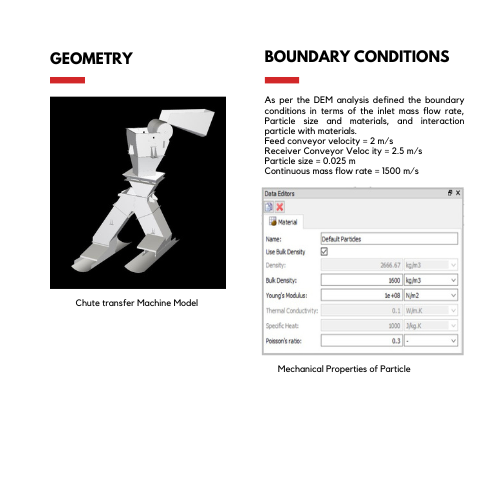
Adaptive remeshing

Mesh superposition technique (MST)

Nonlinear Contact

Capabilities

Ansys Polyflow provides specialized tools to efficiently and accurately simulate rheological behavior

Ansys Polyflow contains high-performance solvers dedicated to polymer simulation. It is able to solve nonlinear material deformations and even has a novel meshing technique to distinguish tools from working materials. This is especially helpful for die design and can help you predict performance or reveal unexpected problems.  The combination of these tools allows engineers to accurately simulate complex material behaviors and rely less on expensive and wasteful trial and error methods.

Capabilities

Key Feartures

Accurately predict material behavior and optimize your manufacturing processes with application-tailored simulation software.

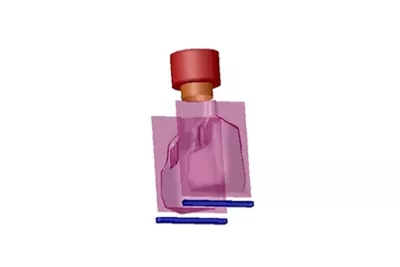
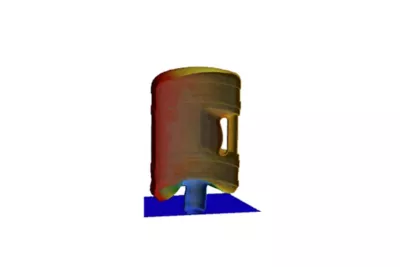
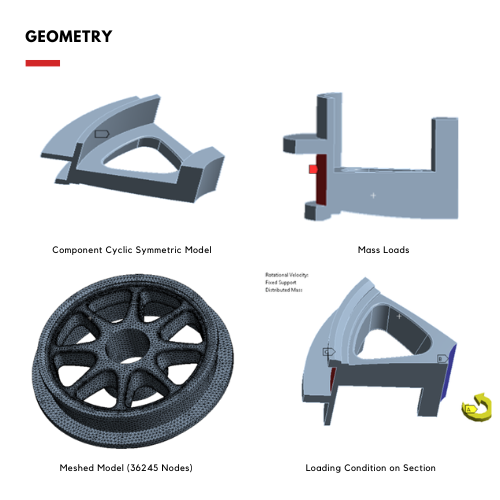
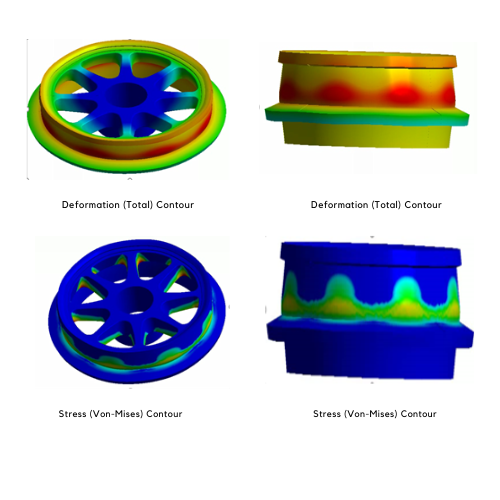
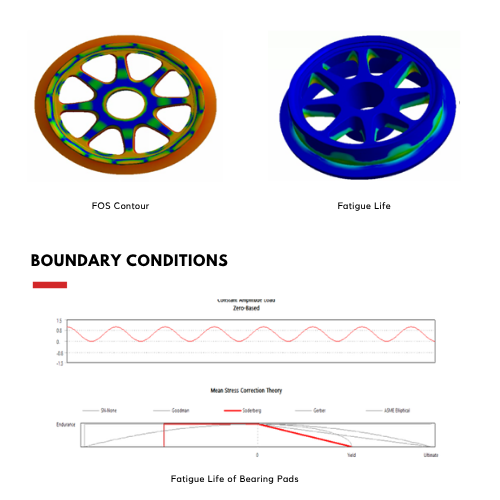
Packaging is important to protect products from damage — but it is also a sustainability issue, as well as an additional cost to goods suppliers. Deploying a virtual prototyping using Polyflow enables you to model the package manufacturing process. By coupling this solution with Ansys explicit dynamics software and Ansys Mechanical, your R&D team can evaluate and test a design’s behavior and durability. You can take corrective action at the design or manufacturing phase (or both) to quickly and cost-effectively design lighter packaging with better performance.

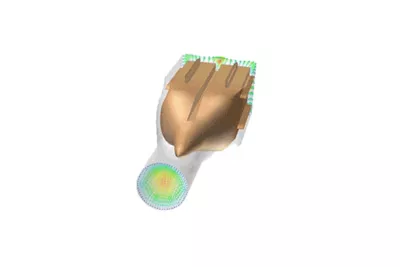
Ansys PolyFlow allows companies to virtually design and test extrusion dies. Users can simulate the extrusion process and automatically perform die shape optimization. As a result, they are able to:

  • Consider multiple design options, making “what if” strategies easy
  • Design dies faster
  • Understand and eliminate flow related problems
  • Enjoy reduced costs for engineering and extrusion line time, die fabrication and scrap material. One company using simulation for die design experienced a 200 percent ROI the first year.

Ansys Polyflow includes a vast library of mathematical material models so you can understand and accurately characterize material behavior. Using the Polyflow material library, you can investigate behavior of new plastics and elastomers for applications as diverse as extrusion, blow molding, thermoforming, fiber spinning and film casting. Simulation enables you to test the ability to process new resins, even before they have ever been produced, by comparing prototypes for different materials to see if they match or outperform existing and competitive materials. You can reverse-design a resin to maximize end-product performance while minimizing costs and environmental impact.

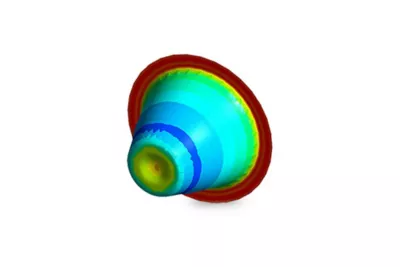
Ansys Polyflow models include viscous heating to allow you to detect potential deterioration of a polymer grade or undesired rubber curing. Accurate modeling of high-temperature processes, such as glass forming, requires the use of advanced nonlinear material properties, accurate radiation prediction (using, for example, the discrete ordinate radiation model) and the Narayanaswamy model that accounts for material stress relaxation during the cooling process.
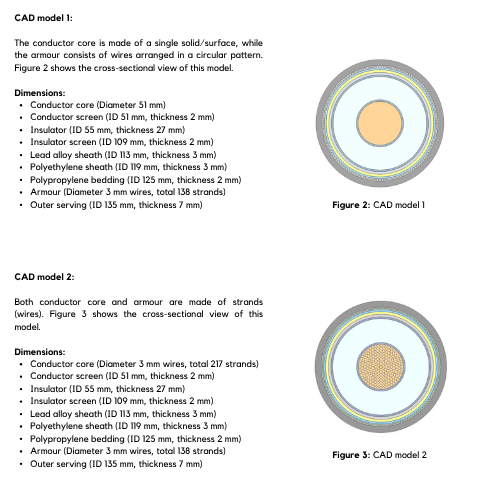
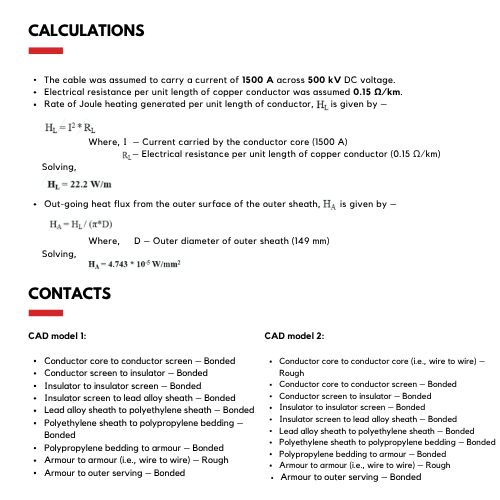
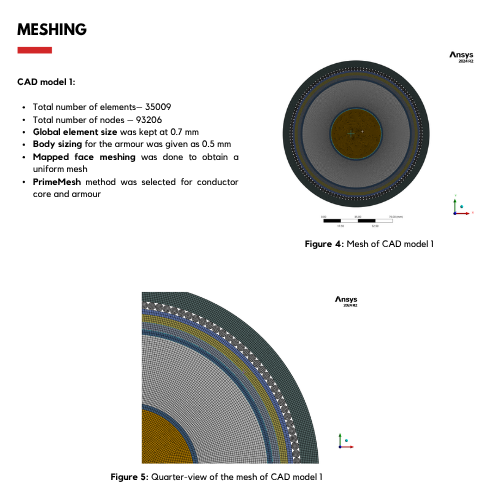
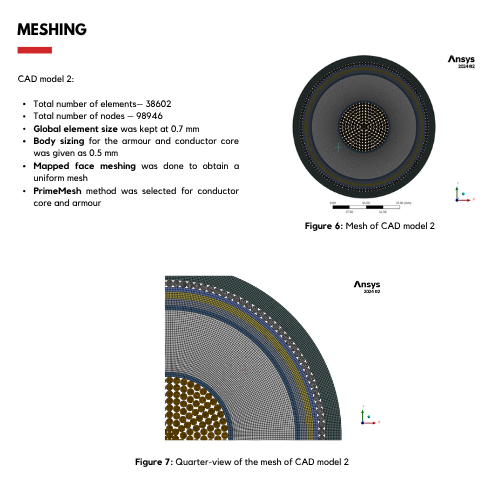
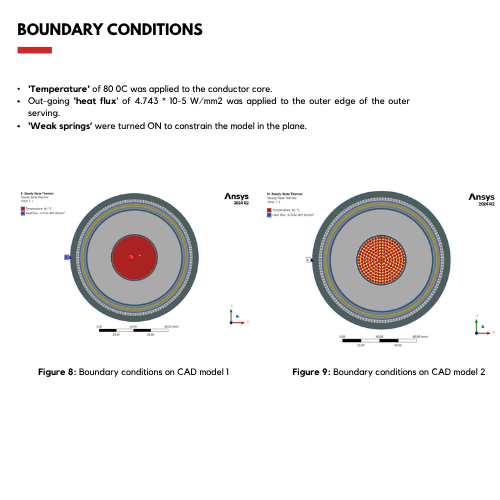
Ansys Polyflow includes native fluid–structure interaction (FSI) to model thermomechanical interactions between flowing materials and surrounding solids in a fully coupled approach. When large deformations occur within the elastic zone, the mesh resolution is automatically refined to improve the quality of results.
You can significantly reduce time to market by seamlessly exporting Polyflow results to Ansys Mechanical software to perform structural analysis. Using the data within Ansys explicit dynamics tools, you can conduct virtual drop tests and calculate top-loading deformation.

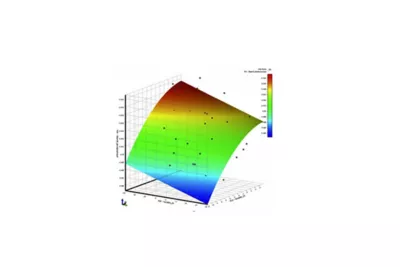
Designing equipment and processes for best results involves evaluating multiple designs and optimizing flow and geometric parameters. With Ansys Polyflow, you can declare any scalar as an optimization variable, including rheological parameters, boundary conditions and mesh displacements. Then you can use the built-in optimization algorithm to automatically minimize or maximize a given objective function based on input parameters.
Visioneering

Recent Events &
Webinars

Discover how engineering simulation is expanding across the entire product lifecycle.
Ansys Multiphysics
Conference

Join us on Saturday, June 10th, 2023, at 3 PM. The event will take place at Riverside Park, 123 River Lane, Springfield.

Blog

Future Tech Expo 2025

Join us on Saturday, June 10th, 2023, at 3 PM. The event will take place at Riverside Park, 123 River Lane, Springfield.

Blog

Innovative Simulations
Summit 2025

Join us on Saturday, June 10th, 2023, at 3 PM. The event will take place at Riverside Park, 123 River Lane, Springfield.

Innovative Simulations
Summit 2025

Join us on Saturday, June 10th, 2023, at 3 PM. The event will take place at Riverside Park, 123 River Lane, Springfield.

Ansys Multiphysics
Conference

Join us on Saturday, June 10th, 2023, at 3 PM. The event will take place at Riverside Park, 123 River Lane, Springfield.

Blog

Innovative Simulations
Summit 2025

Join us on Saturday, June 10th, 2023, at 3 PM. The event will take place at Riverside Park, 123 River Lane, Springfield.

Study
Case

Explore Case Studies

Discover how Qantur Technologies applies advanced CAE, simulation, and engineering expertise to solve real-world design challenges, optimize product performance, reduce development cycles, and deliver measurable engineering outcomes across industries.
Innovate

Events &
white paper

Discover how engineering simulation is expanding across the entire product lifecycle.

Smart Strategies for Large Structural Simulations

One way to gauge the progress of engineering simulation software is through the lens of size. Engineers today routinely run structural simulations with a few million degrees of freedom, and the largest commercial structural simulations have topped even 100 million degrees of freedom.

Many Indian engineering organizations start simulation with one software license and one engineer. As adoption grows, simulation becomes an organizational capability rather than an individual

India’s aerospace and defence sector is increasingly focused on indigenous development, advanced manufacturing, propulsion, electronics and system-level engineering. Simulation can significantly reduce development risk because

Engineering companies across India are increasingly using simulation earlier in the product-development cycle to reduce physical prototyping, improve product quality, accelerate validation and shorten engineering

Visioneering

Blogs & Trends

Discover how engineering simulation is expanding across the entire product lifecycle. engineering / product design analysis by modeling & simulation.

Transform Ideas into Reality—Explore Our Simulation Solutions Today!

Partner with Us to Revolutionize Engineering Excellence!

Testimonials

Customer Testimonials

Fill out the form below, And you will get the details on Email


      Fill out the form below, And you will get the details on Email