Products

AI-Powered Digital Twin Software

Ansys TwinAI is a digital twin solution that integrates the accuracy of physics models with insights from real-world data, powered by AI techniques.
Overview

Build and Validate, Deploy and Scale Hybrid Digital Twin Models

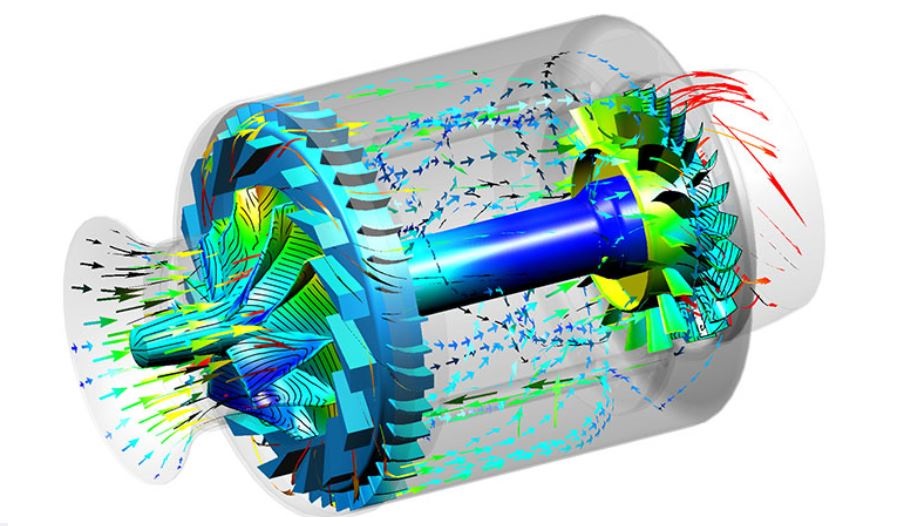
Ansys TwinAI, an AI-augmented simulation-based digital twin platform, validates a digital twin model in an environment found in cloud infrastructures for simulation engines, operating systems, and data streams. It gives access to different kinds of capabilities first to simulate created digital twins, enhance the accuracy of Digital Twins with Hybrid Analytics, and simplify and streamline the deployment process.

Features

Product Specs

Ansys TwinAI integrates the accuracy of physics models with insights from real-world data, powered by cutting-edge AI techniques. Ansys TwinAI delivers unmatched accuracy and speed and unleashes the full potential of your digital twins.

Still have a question?

AI for Fast Twins

Deploy Digital Twins on IIoT Platforms

Easily Scale Deployment With IIoT Platforms

Hybrid Analytics

FMI/FMU Composer

Flexible Licensing
Reduced Order Modeling

Capabilities

Ansys TwinAI Integrates Physics Models With Insights From Real-world Data

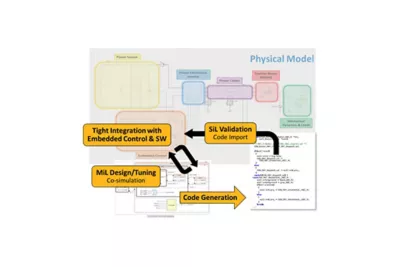
Ansys TwinAI gives the users a graphical environment to import the generated twin, cross-compile the models when required to execute on different OS, and test and validate the twin simulation to ensure its execution performance and accuracy are as expected before deploying.
Capabilities

Key Features

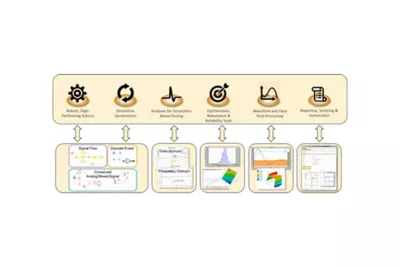
Ansys TwinAI features a wide range of capabilities to get fast, accurate, and evolving twins.

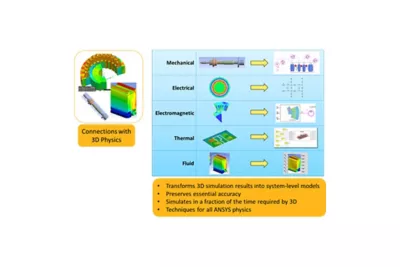
ROM interfaces generate accurate, compact models from detailed 2D and 3D physics simulations and visualize 3D fields with the ROM viewer.
Multiple ROM generation techniques—including state space, electrical circuit equivalent, singular value decomposition (SVD), and modal response—support a range of analysis requirements, whether linear or nonlinear, steady-state, or transient.

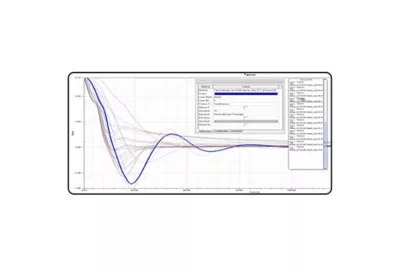
Hybrid Calibration helps to calibrate and tune simulation model parameters ensuring that the simulation outputs match data accurately.

Stochastic methods and uncertainty propagation help quantify uncertainty on parameters and outputs. This feature supports offline (driven by Ansys TwinAI) and online (driven by the IIoT platform) scenarios for parameter calibration. Fusion Modeling accurately models the residual between the model and prediction, allowing users to capture and include any remaining or missing physics into the digital twin.

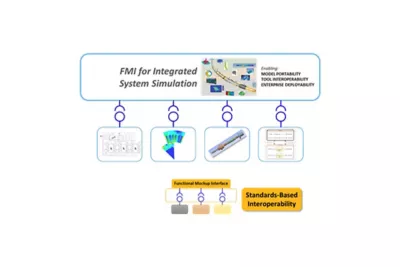
Users can easily import existing FMUs for parameterization or create new FMUs from existing ones.

The Functional Mock-up Interface (FMI) Composer enables the creation and parameterization of model components compliant with the FMI standard, simplifying model exchange across various tools and platforms.

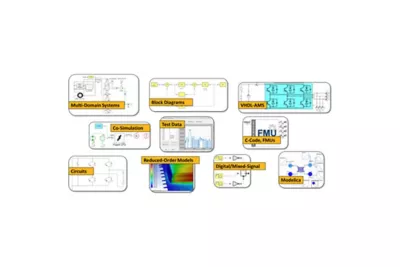
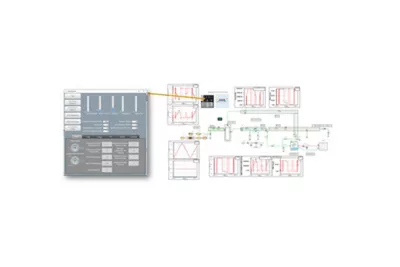
Simulate existing models such as FMUs, Reduced Order Models (ROMs), and Twins to validate performance prediction and analysis.

This feature allows users to import existing models quickly, incorporate test data for validation, and facilitate post-processing.

Python integration simplifies the incorporation of custom algorithms and workflows into the simulation environment.

Users can create custom blocks for tasks such as pre-processing, post-processing, and custom simulations, enhancing flexibility and functionality.

The cross-platform user interface support enables Ansys TwinAI to run seamlessly on various operating systems such as Windows, and supported Linux platforms.

Users can also compile for their specific environment to export and deploy. This ensures broad accessibility and flexibility for users working in diverse computing environments.

Export sample code from Ansys TwinAI to quickly deploy twins on the cloud, edge, or offline.

Develop quick web application prototypes by exporting web apps from Ansys TwinAI to view and interact with simulations in a browser. Easily export a deployable container from Ansys TwinAI that contains a sample Python client application, demonstrating the usage of all APIs.

Configure a connector to connect to an IIoT platform and send and receive operational data.

Export your data to generate portable, cloud-deployable twins for Microsoft® Azure® IoT, Microsoft Azure Digital Twins, PTC ThingWorx®, Automation Emulate 3D, and Rockwell Studio 5000. The Ansys DT SDK enables digital twin testing and deployment on nearly any platform, making it platform agnostic.

Scalable DT licensing offers flexible pricing and configuration options for small and large projects.
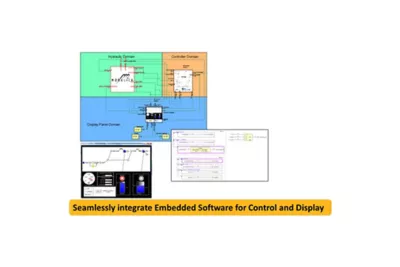
The license-free SDK helps seamlessly integrate various software and platforms in production environments on the cloud and on the edge. The REST API and SDK allow for the smooth integration of other software components, third-party services, and IIoT platforms, ensuring scalability and interoperability. Containers with dependencies provide a uniform and portable environment that can be deployed across several platforms and operating systems, providing easy deployment and scalability.

Visioneering

Recent Events &
Webinars

Discover how engineering simulation is expanding across the entire product lifecycle.

Ansys Multiphysics
Conference

Join us on Saturday, June 10th, 2023, at 3 PM. The event will take place at Riverside Park, 123 River Lane, Springfield.

Blog

Future Tech Expo 2025

Join us on Saturday, June 10th, 2023, at 3 PM. The event will take place at Riverside Park, 123 River Lane, Springfield.

Blog

Innovative Simulations
Summit 2025

Join us on Saturday, June 10th, 2023, at 3 PM. The event will take place at Riverside Park, 123 River Lane, Springfield.

Innovative Simulations
Summit 2025

Join us on Saturday, June 10th, 2023, at 3 PM. The event will take place at Riverside Park, 123 River Lane, Springfield.

Ansys Multiphysics
Conference

Join us on Saturday, June 10th, 2023, at 3 PM. The event will take place at Riverside Park, 123 River Lane, Springfield.

Blog

Innovative Simulations
Summit 2025

Join us on Saturday, June 10th, 2023, at 3 PM. The event will take place at Riverside Park, 123 River Lane, Springfield.

Study
Case

Explore Case Studies

Discover how Qantur Technologies applies advanced CAE, simulation, and engineering expertise to solve real-world design challenges, optimize product performance, reduce development cycles, and deliver measurable engineering outcomes across industries.
Innovate

Events &
white paper

Discover how engineering simulation is expanding across the entire product lifecycle.

Smart Strategies for Large Structural Simulations

One way to gauge the progress of engineering simulation software is through the lens of size. Engineers today routinely run structural simulations with a few million degrees of freedom, and the largest commercial structural simulations have topped even 100 million degrees of freedom.

Many Indian engineering organizations start simulation with one software license and one engineer. As adoption grows, simulation becomes an organizational capability rather than an individual

India’s aerospace and defence sector is increasingly focused on indigenous development, advanced manufacturing, propulsion, electronics and system-level engineering. Simulation can significantly reduce development risk because

Engineering companies across India are increasingly using simulation earlier in the product-development cycle to reduce physical prototyping, improve product quality, accelerate validation and shorten engineering
Visioneering
Blogs & Trends

Discover how engineering simulation is expanding across the entire product lifecycle. engineering / product design analysis by modeling & simulation.
Transform Ideas into Reality—Explore Our Simulation Solutions Today!

Partner with Us to Revolutionize Engineering Excellence!

Testimonials

Customer Testimonials

Fill out the form below, And you will get the details on Email


      Fill out the form below, And you will get the details on Email