Products
LS-DYNA
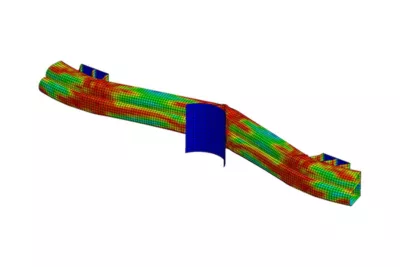
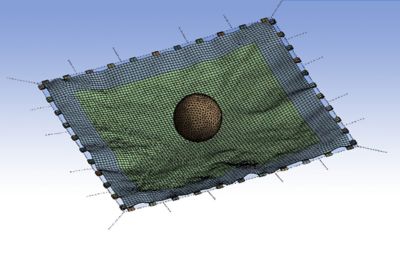
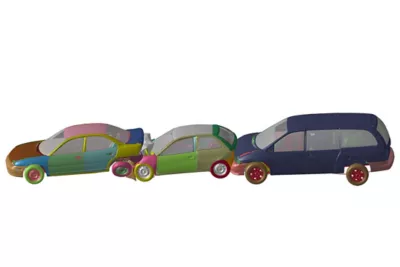
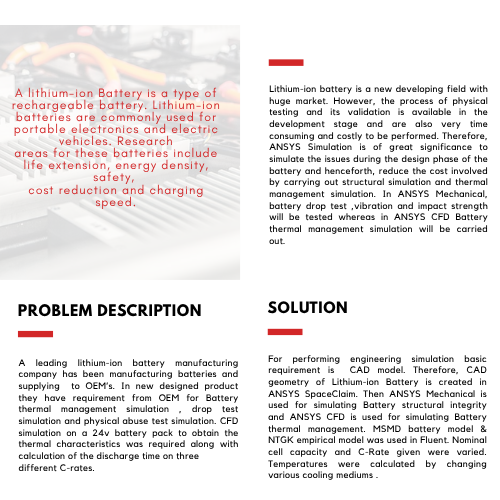
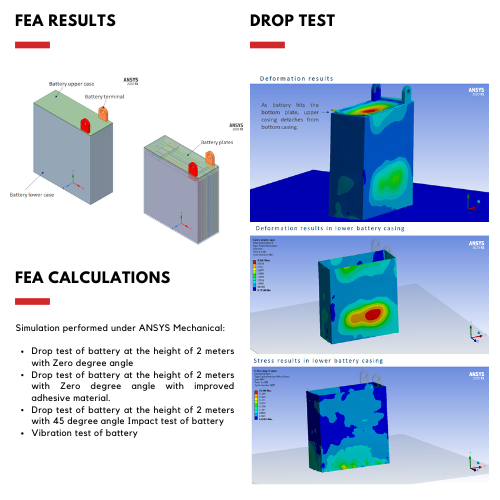
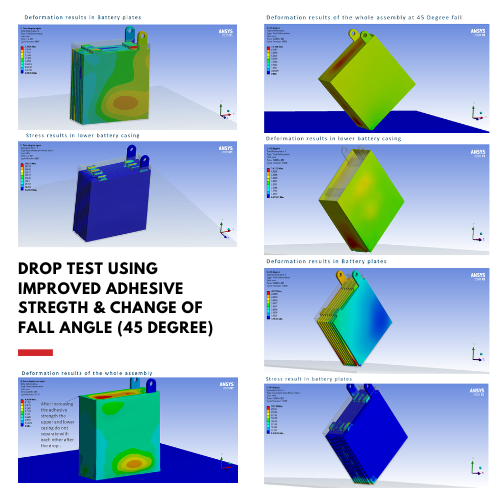
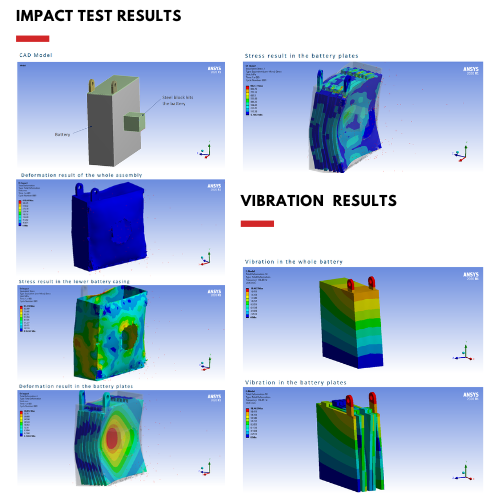
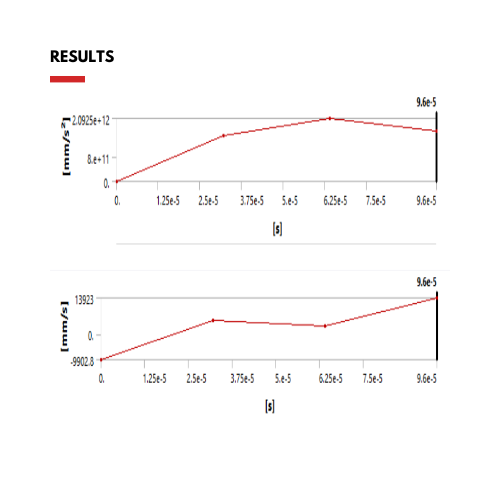
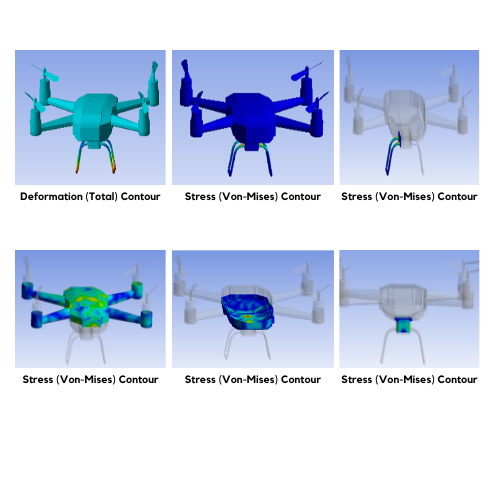
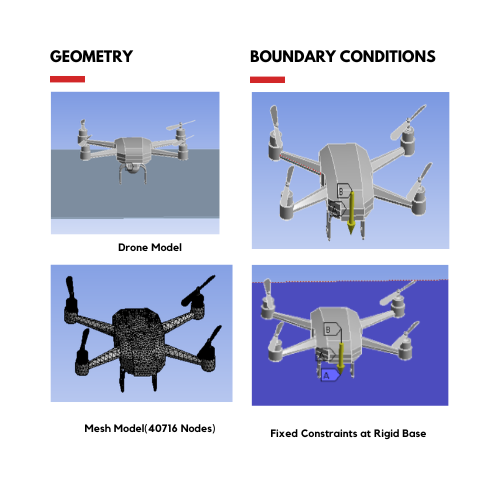
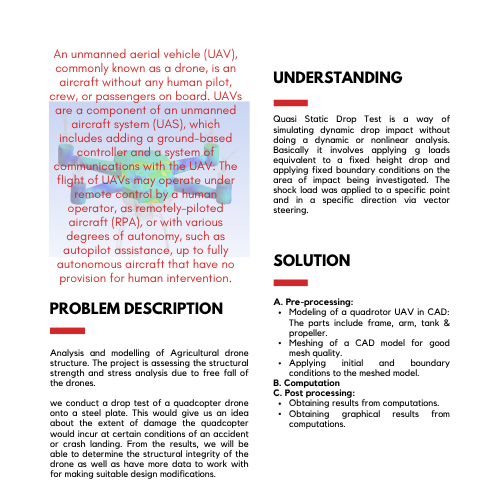
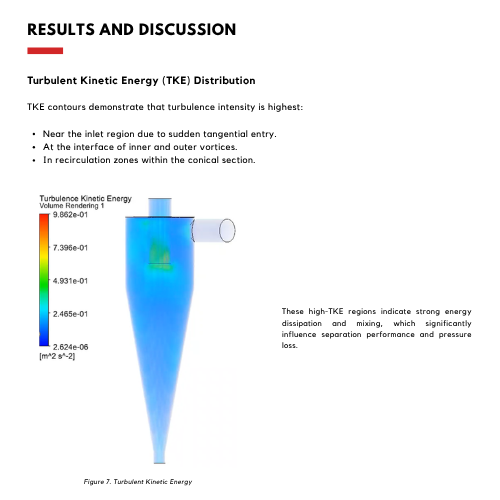
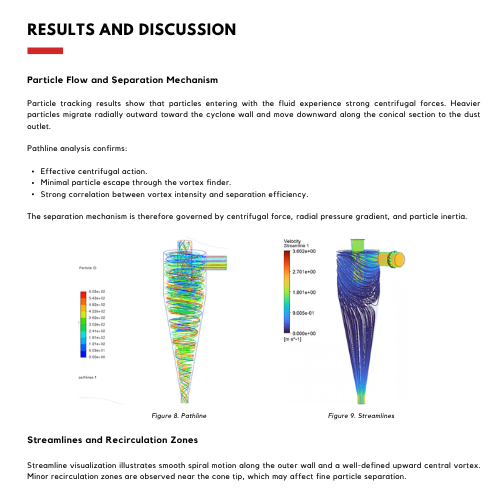
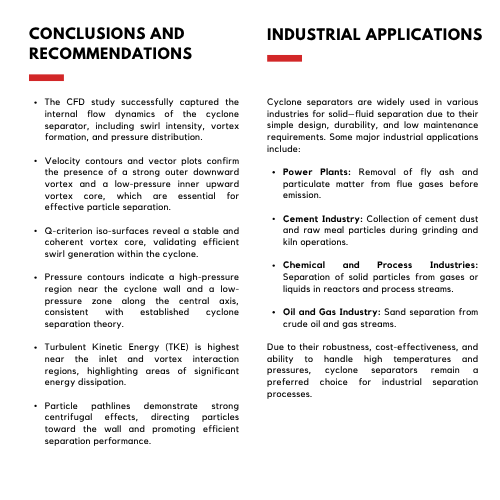
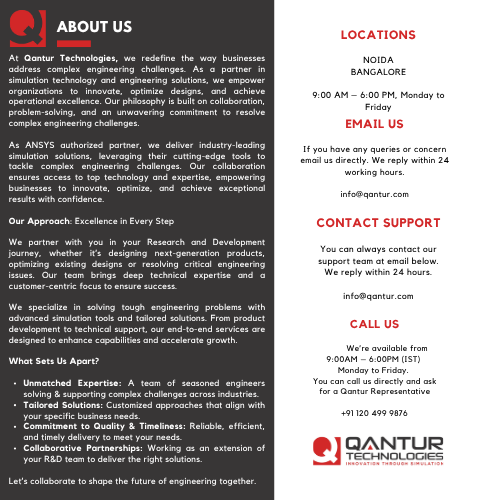
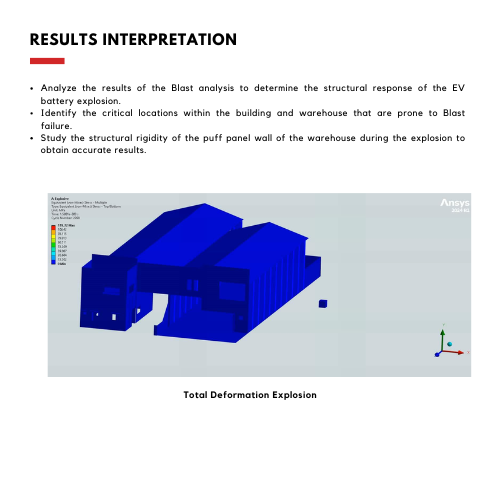
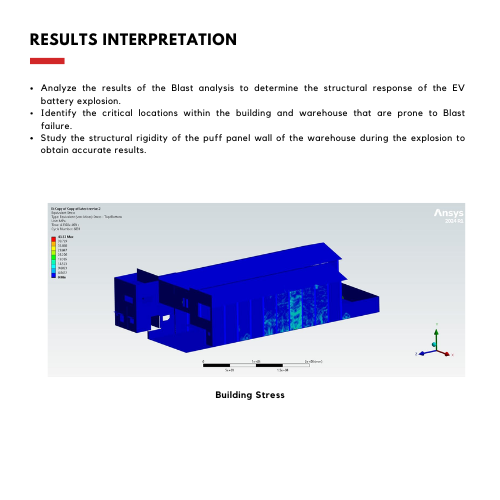
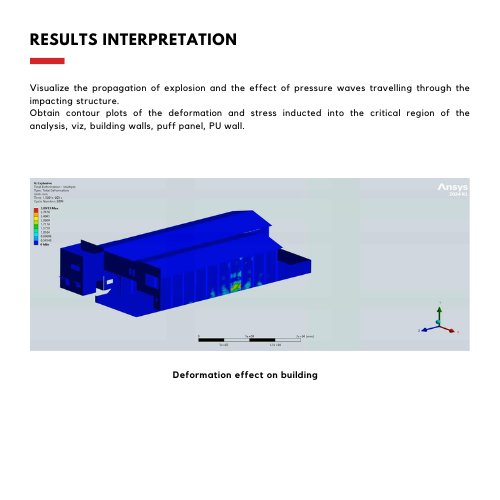
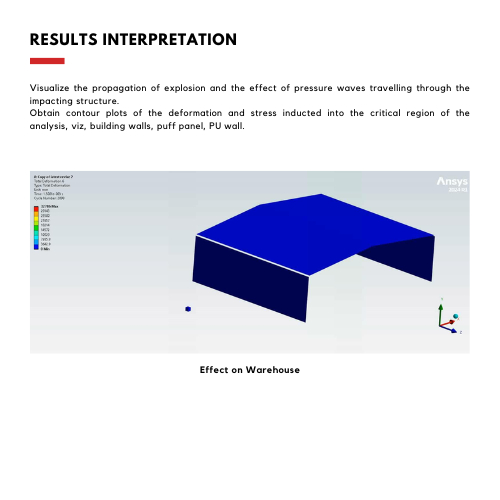
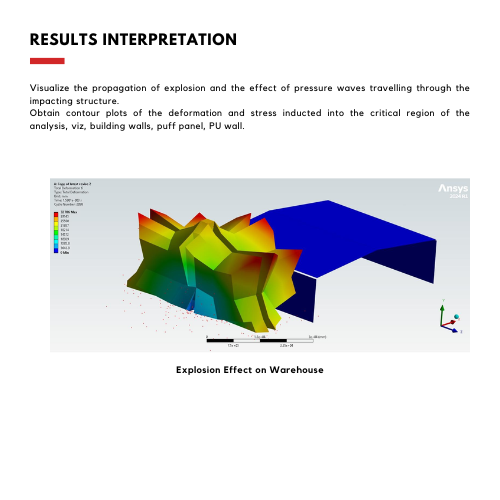
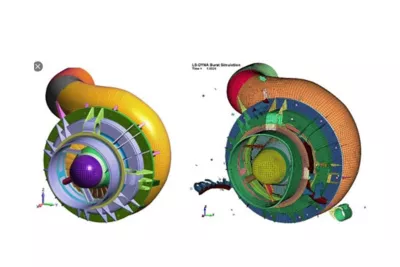
LS-DYNA is the industry-leading explicit simulation software used for applications like drop tests, impact and penetration, smashes and crashes, occupant safety, and more.
Overview
Simulate the Response of Materials to Short Periods of Severe Loading
Ansys LS-DYNA is the most used explicit simulation program in the world and is capable of simulating the response of materials to short periods of severe loading. Its many elements, contact formulations, material models and other controls can be used to simulate complex models with control over all the details of the problem. Ansys LS-DYNA applications include:
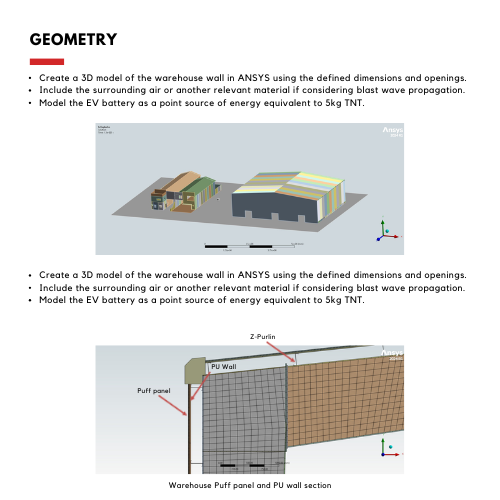
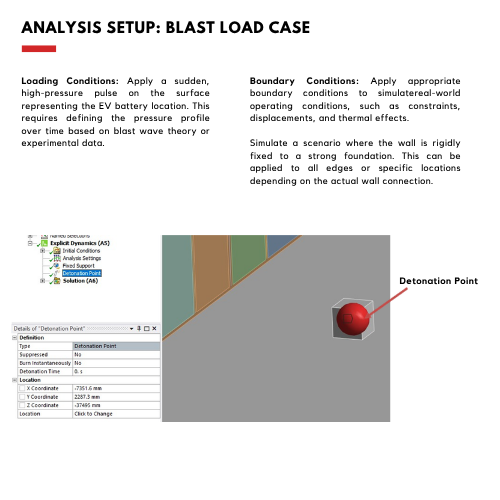
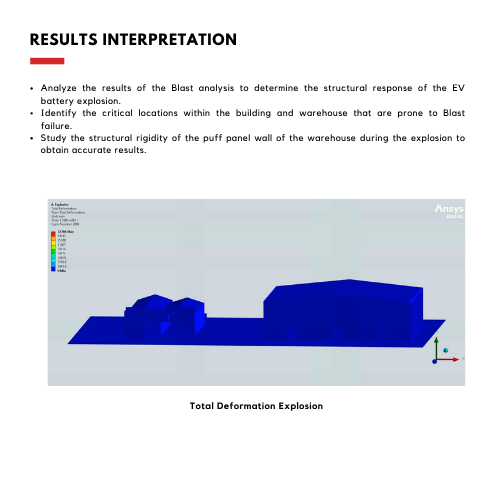
- Explosion / Penetration
- Drop Test of All Forms
- Bird Strike
- Impacts
- Crashworthiness / Airbag Simulations
- Product Misuse / Severe Loadings
- Fracture
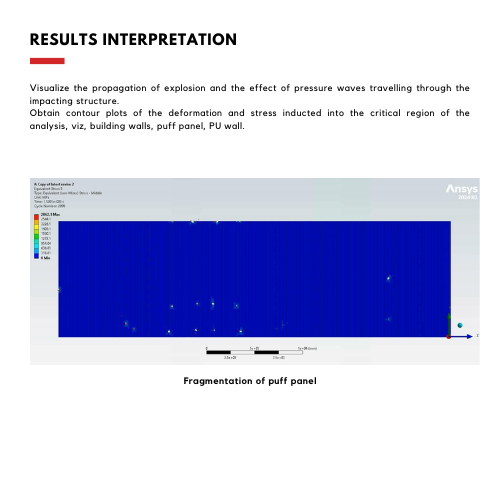
- Product Failure / Fragmentation
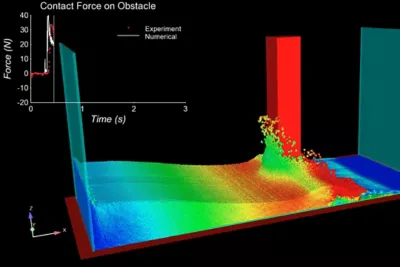
- Splashing / Hydroplaning / Sloshing
- Large Plasticity in Mechanisms
- Incompressible and Compressible Fluids
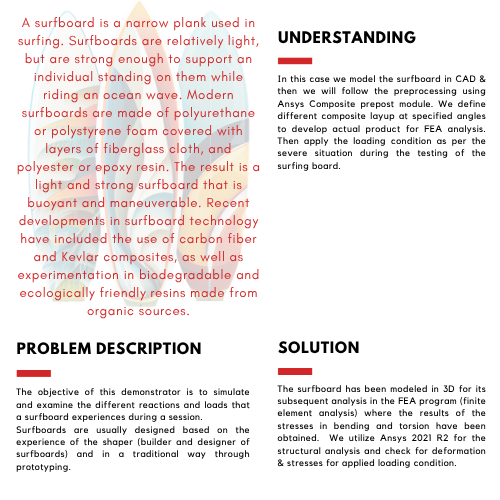
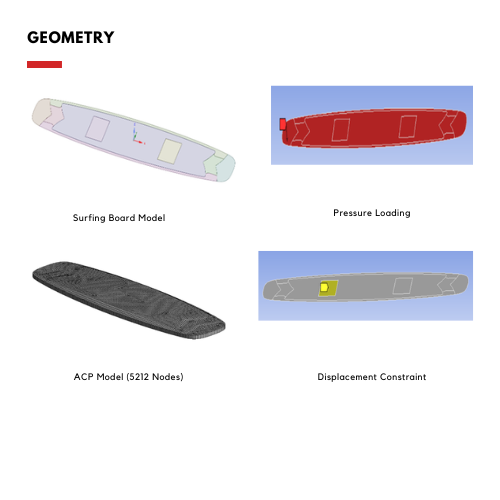
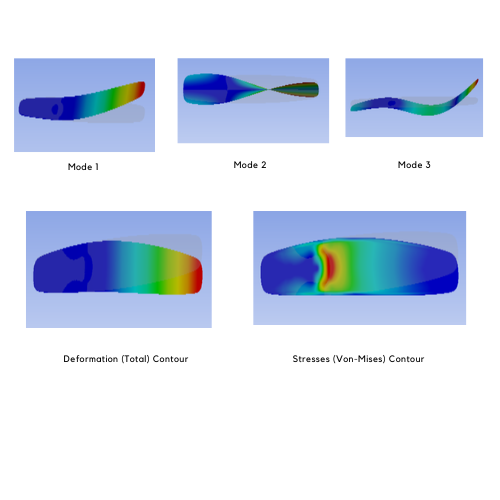
- Sports Equipment Design
- Stamping / Forming / Drawing / Forging
- Manufacturing Processes Like Machining / Cutting / Drawing
- Biomedical and Medical Devices Simulations
- Vehicle Crash and Occupant Safety
features
Quick Features & Benefits
LS-DYNA delivers a diverse array of analyses with extremely fast and efficient parallelization.
Still have a question?
Implicit and Explicit Solvers
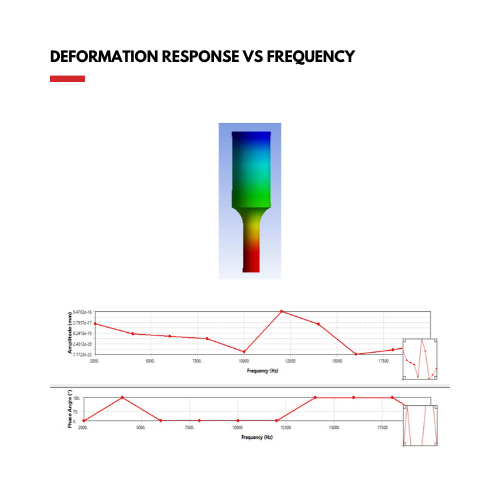
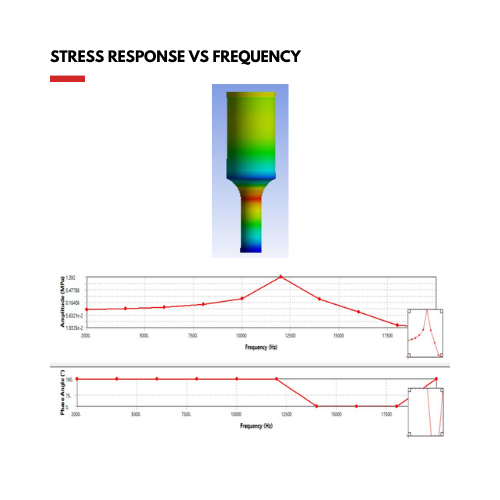
Frequency Domain Analysis
ICFD for Incompressible Fluid
Electromagnetics Solver
Electromagnetics
Particle Methods
Contact – Linear and Nonlinear
Adaptive Remeshing
Meshless – SPH and ALE
Advanced CAE
Supporting Tools
Total Human Model for Safety (THUMS™)
Licensing
A Quick Guide to
Licensing Basics
There are three licensing options available with Ansys Mechanical:
Mechanical Pro
Mechanical Premium
Mechanical Enterprise
Full thermal analysis
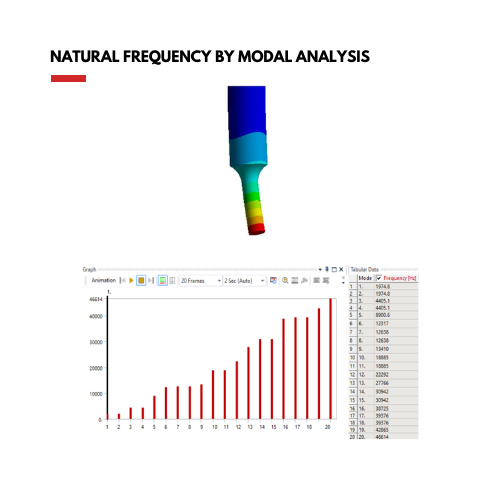
Modal analysis
Full contact
Non-linear geometry
Material plasticity
Structural optimization
Pre-stressed modal
4 HPC Cores
Full linear dynamics
Element birth and death
Full material non-linearity
Coupled field elements
User defined material model formulations
Capabilities
Vast array of capabilities to simulate extreme deformation problems
Engineers can tackle simulations involving material failure and look at how the failure progresses through a part or through a system. Models with large amounts of parts or surfaces interacting with each other are also easily handled, and the interactions and load passing between complex behaviors are modeled accurately. Using computers with higher numbers of CPU cores can drastically reduce solution times.
Capabilities
Key Features
LS-DYNA elements, contact formulations, material models and other controls can be used to simulate complex models with control over all the details of the problem.
Implicit and Explicit Solvers
Implicit and Explicit Solvers Easily switch between Implicit and Explicit solvers for your different runs.
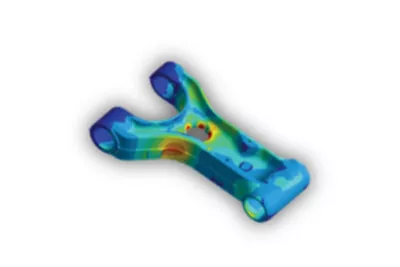
Frequency Domain Analysis
Frequency Domain Analysis Frequency domain analysis allows LS-Dyna users to explore capabilities such as frequency response function, steady state dynamics, random vibration, response spectrum analysis, acoustics BEM and FEM, and fatigue SSD and random vibration. You can use these capabilities for applications such as NVH, acoustic analysis, defense industry, fatigue analysis and earthquake engineering.
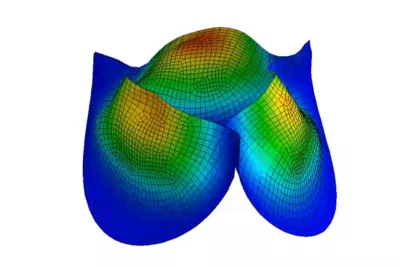
ICFD for Incompressible Fluid
ICFD for Incompressible Fluid ICFD solver is a stand-alone CFD code that includes a steady-state solver, transient solver, turbulence model for RANS/LES, free surface flows and isotropic/anisotropic porous media flow. Coupled to structural, EM solver and thermal solver.
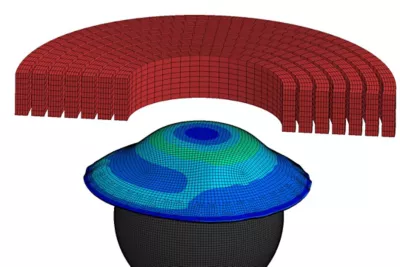
Electromagnetics Solver
Electromagnetics Solver EM solves the Maxwell equations using FEM & BEM in the Eddy current approximation. This is suitable for cases where the propagation of electromagnetic waves in air (or vacuum) can be considered as instantaneous. The main applications are magnetic metal forming or welding, induced heating, and battery abuse simulation.
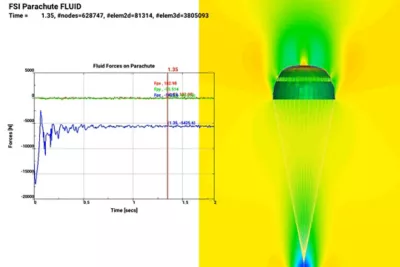
Multiphysics Solver
Multiphysics Solver Multiphysics Solver include ICFD for Incompressible Fluids, electromagnetic solver, EM for battery abuse, and CESE for compressible fluids.
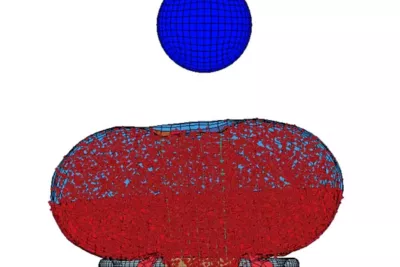
Particle Methods
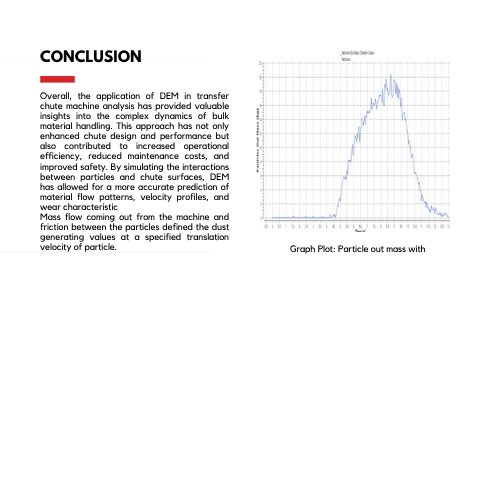
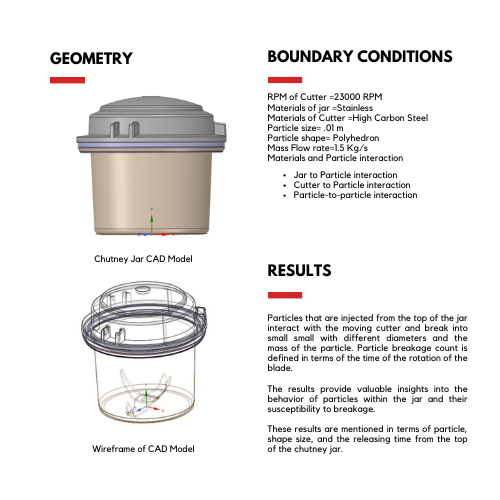
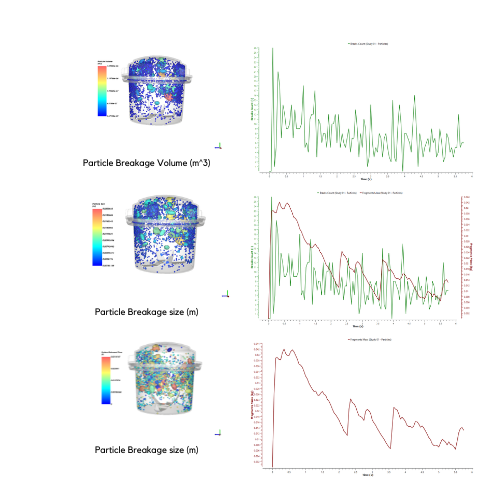
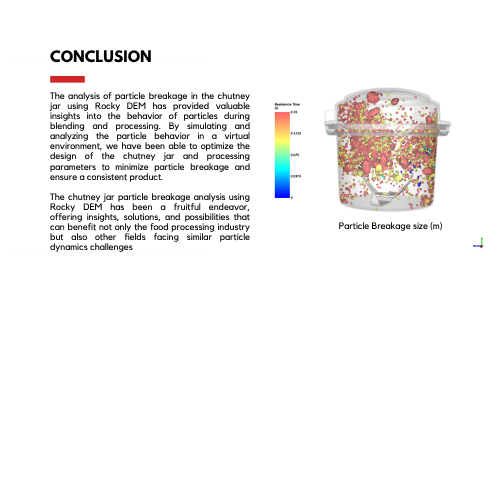
Particle Methods There are several particle methods using LS-Dyna. AIRBAG_PARTICLE is used for for airbag gas particles which models the gas as a set of rigid particles in random motion. PARTICLE_BLAST for high explosive particles which models high explosive gas and air modeled Particle gas. Discrete element method includes applications such as agriculture and food handling, chemical and civil Engineering, mining, mineral processing.
Contact – Linear and Nonlinear
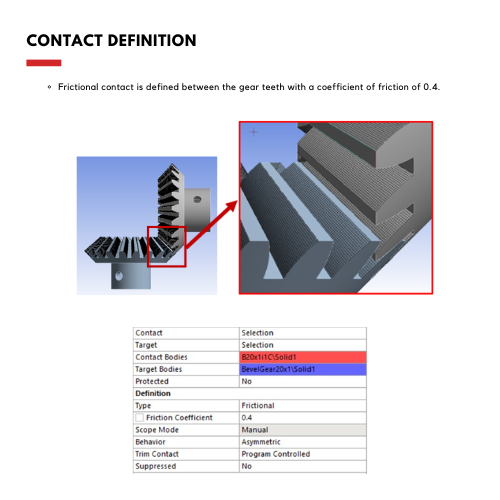
Contact – Linear and Nonlinear In LS-DYNA, a contact is defined by identifying (via parts, part sets, segment sets, and/or node sets) what locations are to be checked for potential penetration of a slave node through a master segment. A search for penetrations, using any of a number of different algorithms, is made every time. In the case of a penalty-based contact, when a penetration is found, a force proportional to the penetration depth is applied to resist, and ultimately eliminate the penetration. Rigid bodies may be included in any penalty-based contact but for that contact force to be realistically distributed, it is recommended that the mesh defining any rigid body be as fine as that of a deformable body.
Adaptive Remeshing
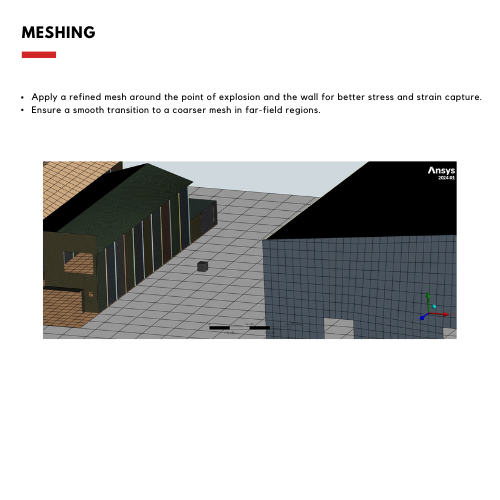
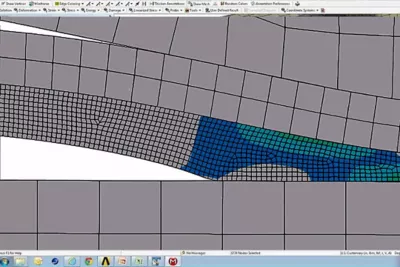
Adaptive Remeshing Several tools are provided for local refinement of the volume mesh in order to better capture mesh sensitive phenomenon’s such as turbulent eddies or boundary layer separation reattachment. During the geometry set up, the user can define surfaces that will be used by the mesher to specify a local mesh size inside the volume. If no internal mesh is used to specify the size, the mesher will use a linear interpolation of the surface sizes that define the volume enclosure.
Meshless SPH
Meshless SPH SPH method in Ansys LS-DYNA® is coupled with the finite and discrete element methods, extending its range of applications to a variety of complex problems involving multiphysics interactions of explosion or fluid-structure interaction.
Meshless ALE
Meshless ALE Ansys LS-DYNA has two different classes of mesh-free particle solvers: continuum-based smooth particle hydrodynamics (SPH), and discrete particle solvers using the discrete element method (DEM), the particle blast method (PBM) and the corpuscular particle method (CPM). These solvers are used in various applications like hypervelocity impacts; explosions; friction stir welding; water wading; fracture analysis in car windshields, window glass and composite materials; metal friction drilling; metal machining; and high-velocity impact on concrete and metal targets.
Advanced CAE
Advanced CAE Peridynamics & SPG
The smoothed particle Galerkin (SPG) method is a new Lagrangian particle method for simulating the severe plastic deformation and material rupture taken place in ductile material failure. The Peridynamics method is another compelling method for brittle fracture analysis in isotropic materials as well as certain composites such as CFRP. These two numerical methods share a common feature in modeling the 3D material failure using a bond-based failure mechanism. Since the material erosion technique is no more necessary, the simulation of the material failure processes becomes very effective and stable.
Isogeometric Analysis (IGA)
The isogeometric paradigm employs basis functions from computer-aided design (CAD) for numerical analysis. The actual geometry of the CAD parts is preserved which is in sharp contrast to finite element analysis (FEA) where the geometry is approximated with, potentially higher-order, polynomials. Isogeometric analysis (IGA) has been extensively studied in the past few years in order to (1) reduce the effort of moving between design and analysis representations and (2) obtain higher-order accuracy through the higher-order interelement continuity of the spline basis functions used in CAD. LS-DYNA is the first commercial code to support IGA through the implementation of generalized elements and then keywords supporting non-uniform rational B-splines (NURBS). Many of the standard FEA capabilities, such as contact, spot-weld models, anisotropic constitutive laws, or frequency domain analysis, are readily available in LS-DYNA with new features added steadily.
Supporting Tools
Supporting Tools LS-OPT
Ansys LS-OPT is a standalone design optimization and probabilistic analysis package with an interface to Ansys LS-DYNA. It is difficult to achieve an optimal design because design objectives are often in conflict. LS-OPT uses a systematic approach involving an inverse process for design optimization: First you specify the criteria and then you compute the best design according to a mathematical framework.
Probabilistic analysis is necessary when a design is subjected to structural and environmental input variations that cause a variation in response that may lead to undesirable behavior or failure. A probabilistic analysis, using multiple simulations, assesses the effect of the input variation on the response variation and determines the probability of failure.
Together, design optimization and probabilistic analysis help you to reach an optimal product design quickly and easily, saving time and money in the process.
Typical applications of LS-OPT include:
- Design optimization
- System identification
- Probabilistic analysis
LS-TaSC
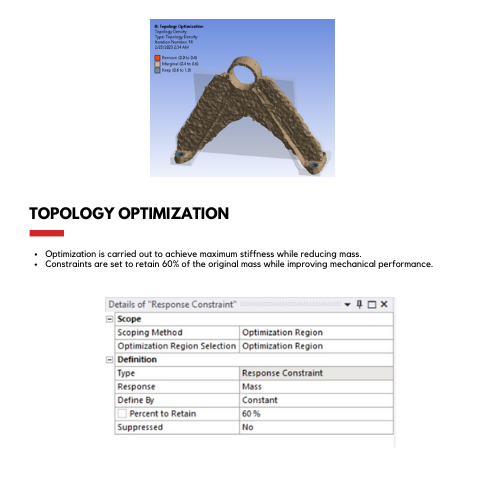
LS-TaSC™ is a Topology and Shape Computation tool. Developed for engineering analysts who need to optimize structures, LS-TaSC works with both the implicit and explicit solvers of LS-DYNA. LS-TaSC handles topology optimization of large nonlinear problems, involving dynamic loads and contact conditions.
Supporting Tools/LST Models
Supporting Tools/LST Models Dummies

Anthropomorphic Test Devices (ATDs), as known as “crash test dummies”, are life-size mannequins equipped with sensors that measure forces, moments, displacements, and accelerations. These measurements can then be interpreted to predict the extent of injuries that a human would experience during an impact. Ideally, ATDs should behave like real human beings while being durable enough to produce consistent results across multiple impacts. There are a wide variety of ATDs available to represent different human sizes and shapes.
Barriers
LSTC offers several Offset Deformable Barrier (ODB) and Movable Deformable Barrier (MDB) models. LSTC ODB and MDB models are developed to correlate to several tests provided by our customers. These tests are proprietary data and are not currently available to the public.
Tires
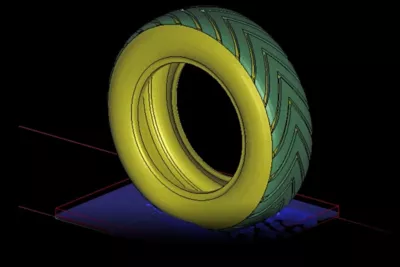
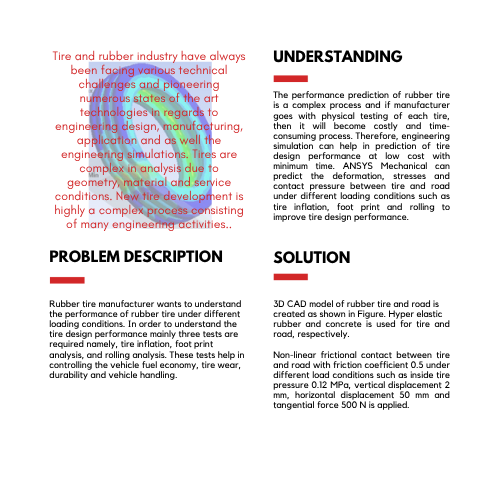
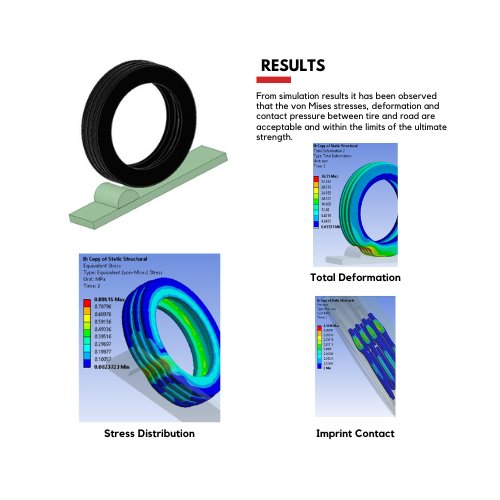
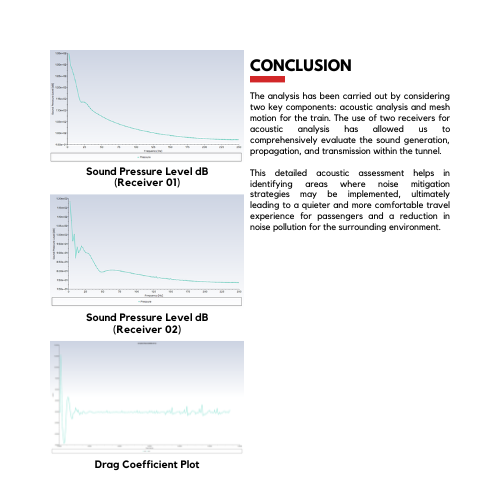
LST jointly developed tire models with FCA. These models can be downloaded through the LST, Models download section. The models are based on a series of material, verification, and component level tests. The finite element mesh is based on 2D CAD data of the tire section. All major components of the tire use 8-noded hexahedron elements. The elastomers are modeled using *MAT_SIMPLIFIED_RUBBER and the plies are modeled using *MAT_ORTHOTROPIC_ELASTIC.
Visioneering
Recent Events &
Webinars
Discover how engineering simulation is expanding across the entire product lifecycle.
Ansys Multiphysics
Conference
Join us on Saturday, June 10th, 2023, at 3 PM. The event will take place at Riverside Park, 123 River Lane, Springfield.
Blog
Future Tech Expo 2025
Join us on Saturday, June 10th, 2023, at 3 PM. The event will take place at Riverside Park, 123 River Lane, Springfield.
Blog
Innovative Simulations
Summit 2025
Join us on Saturday, June 10th, 2023, at 3 PM. The event will take place at Riverside Park, 123 River Lane, Springfield.
Innovative Simulations
Summit 2025
Join us on Saturday, June 10th, 2023, at 3 PM. The event will take place at Riverside Park, 123 River Lane, Springfield.
Ansys Multiphysics
Conference
Join us on Saturday, June 10th, 2023, at 3 PM. The event will take place at Riverside Park, 123 River Lane, Springfield.
Blog
Innovative Simulations
Summit 2025
Join us on Saturday, June 10th, 2023, at 3 PM. The event will take place at Riverside Park, 123 River Lane, Springfield.
Visioneering
Blogs & Trends
Discover how engineering simulation is expanding across the entire product lifecycle. engineering / product design analysis by modeling & simulation.

Innovative Simulations Summit 2024
Introduction Mi tincidunt elit, id quisque ligula ac diam, amet. Vel etiam suspendisse morbi eleifend faucibus eget vestibulum felis. Dictum
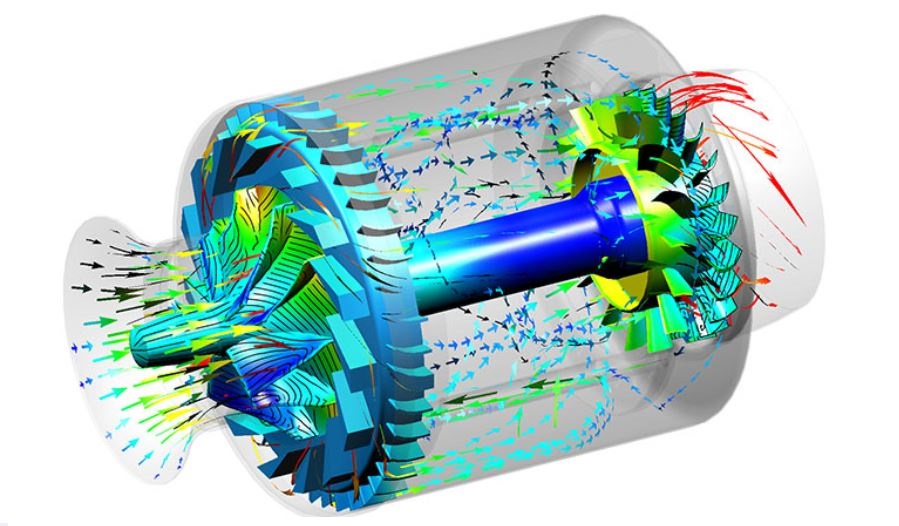
Ansys Multiphysics Conferences
Introduction Mi tincidunt elit, id quisque ligula ac diam, amet. Vel etiam suspendisse morbi eleifend faucibus eget vestibulum felis. Dictum
Ansys Multiphysics Conferences
Introduction Mi tincidunt elit, id quisque ligula ac diam, amet. Vel etiam suspendisse morbi eleifend faucibus eget vestibulum felis. Dictum
Innovative Simulations Summit 2024
Introduction Mi tincidunt elit, id quisque ligula ac diam, amet. Vel etiam suspendisse morbi eleifend faucibus eget vestibulum felis. Dictum
Innovate
Breaking News & White Paper
Discover how engineering simulation is expanding across the entire product lifecycle.
Smart Strategies for Large Structural Simulations
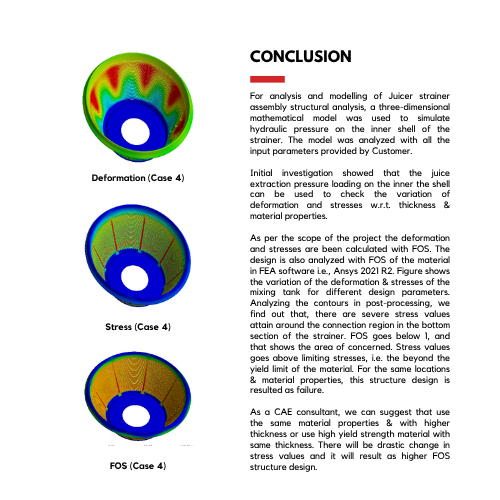
One way to gauge the progress of engineering simulation software is through the lens of size. Engineers today routinely run structural simulations with a few million degrees of freedom, and the largest commercial structural simulations have topped even 100 million degrees of freedom.
Introduction Mi tincidunt elit, id quisque ligula ac diam, amet. Vel etiam suspendisse morbi eleifend faucibus eget vestibulum felis. Dictum quis montes, sit sit. Tellus
Studies
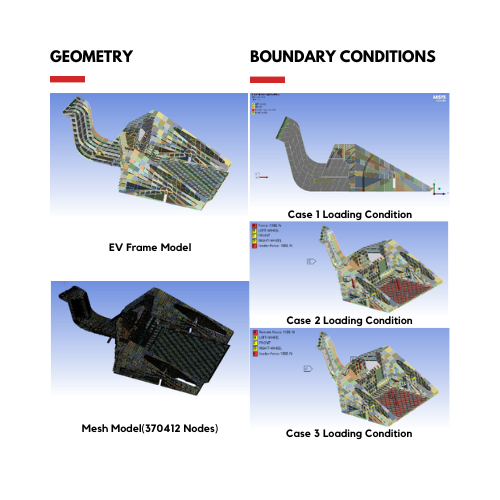
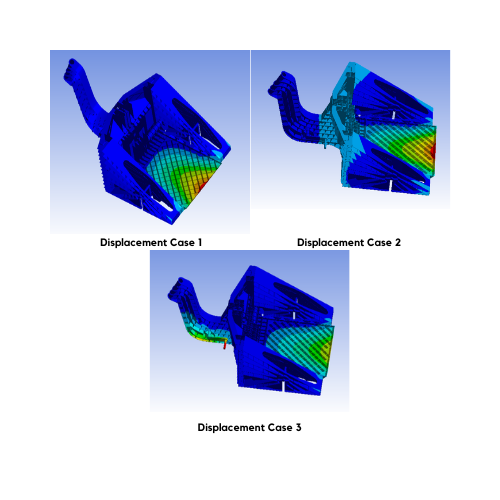
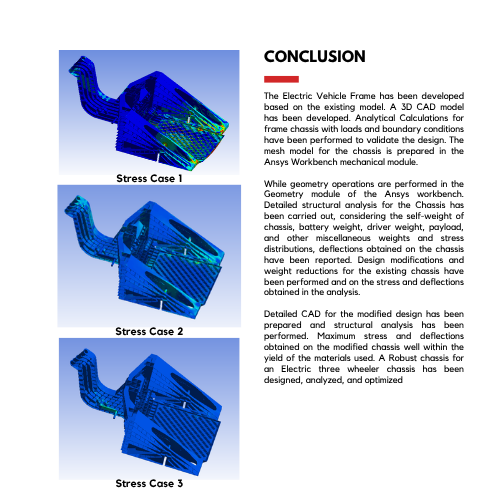
Case
Explore Case Studies
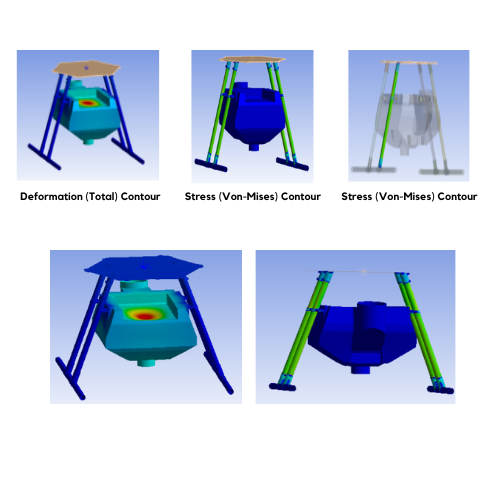
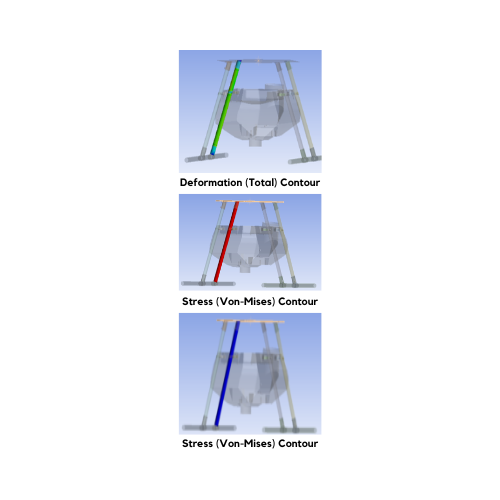
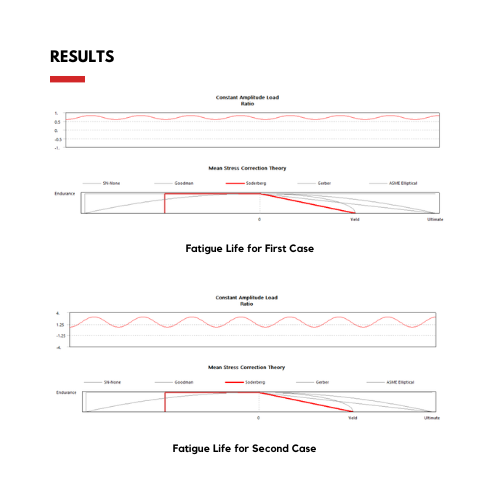
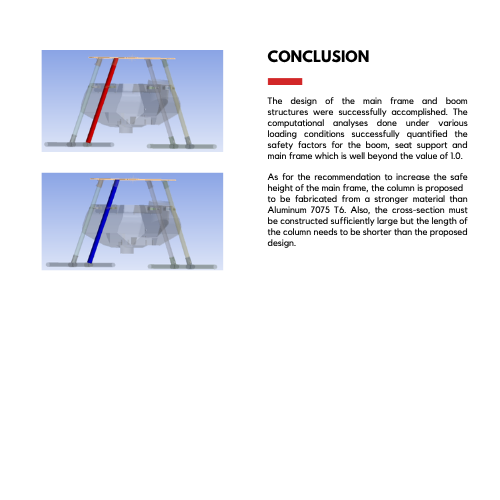
Qantur Technologies is a pioneer engineering simulations company based in Gurgaon –India. We provides expert Computer Aided Engineering – CAE consulting services for engineering / product design analysis by modeling & simulation.
Download Case Study
Transform Ideas into Reality—Explore Our Simulation Solutions Today!
Partner with Us to Revolutionize Engineering Excellence!
Testimonials
Customer Testimonials
Bengal Industries Pvt. Ltd
Highly informative ANSYS Mechanical training resolved contact, meshing, fatigue challenges, delivered professionally with structured sessions and dependable post-sales support.
Sneha Iyer — Simulation & Validation Lead
Strong CFD expertise and reliable consulting achieved high accuracy, building confidence and establishing a preferred partnership for complete ANSYS simulation solutions.
Aditya Rao — Senior FEA Specialist
Insightful ANSYS training enhanced analytical skills through expert guidance in FEA, CFD, geometry, meshing, and modeling for students and faculty.
Nikhil Bansal—Product Engineering
Outstanding ANSYS implementation and consulting delivered timely FEA and CFD support, strengthening team capabilities through structured, high-value training sessions.
Ananya Mehta — CAE Project Lead
Advanced ANSYS HPC and CFD solutions enabled effective hydro turbine simulations, supported by expert training, technical guidance, and reliable support.
Saurabh Joshi — Senior Mechanical Engineer
Customized SpaceClaim training with hands-on workshops improved modeling skills, supported by proactive guidance, tailored sessions, and strong application engineering expertise.
Pooja Shah — CFD & Thermal Analysis Lead
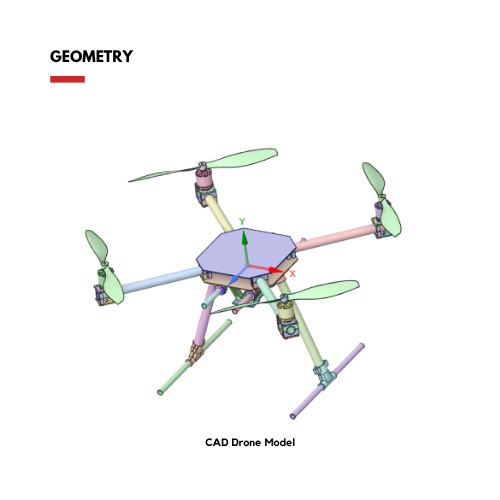
Advanced drone development benefited from ANSYS expertise, delivering effective FEA and CFD solutions, training, and support for complex engineering challenges.
Manish Gupta — Engineering Analysis Manager
Innovation in autonomous drones improved through ANSYS implementation, expert FEA, CFD consulting, and training for better validation, performance, and efficiency.
Arjun—Head – Engineering Analysis
Significant R&D improvements achieved through ANSYS expertise, accelerating validation, optimizing performance, and solving complex engineering challenges with expert support.
Rahul Mittal — Head of R&D
Rail solutions enhanced using ANSYS ICEPAK and Mechanical, delivering expert training, strong FEA, CFD support, and deeper understanding of core physics.
Vikram Sharma — Lead Engineer – Simulation
Responsive CFD support and training enabled faster validation, solving meshing challenges and strengthening R&D team’s simulation and design capabilities effectively.
Neha Kapoor — Manager – R&D
Reliable ANSYS implementation and FEA expertise delivered consistently under challenging conditions, demonstrating professionalism, technical strength, and strong project commitment.
Arjun Mehta — Senior Simulation Engineer
Engineering capabilities improved with ANSYS Mechanical expertise, optimizing components through hands-on training, prompt support, and strong FEA knowledge application.
Rohan Malhotra—Engineering Manager–CAE
Exceptional ANSYS expertise combining LS-DYNA and Mechanical training, supported by proactive guidance, solving complex challenges with professionalism and customer-focused collaboration.
Priya Nair — Lead CFD Engineer
Informative ANSYS Mechanical training enhanced analytical skills, delivered smoothly with strong coordination, structured sessions, and excellent trainer support throughout program.
Amit Verma — Senior Design Engineer
ANSYS FEA and CFD expertise improved product reliability, optimization, and efficiency through strong consulting, implementation, training, and dedicated technical support.