Products
Ansys Sherlock for Electronics Reliability
Assess component, board and system reliability early in the design cycle with physics-based life prediction that helps identify failure risks, improve durability and accelerate product validation.
Overview
Ansys Sherlock for Product Life Prediction
Ansys Sherlock provides fast and accurate life predictions for electronic hardware at the component, board and system levels in early design stages. Sherlock bypasses the ‘test-fail-fix-repeat’ cycle by empowering designers to accurately model silicon–metal layers, semiconductor packaging, printed circuit boards (PCBs) and assemblies to predict failure risks due to thermal, mechanical and manufacturing stressors–all before prototype.
- Validated Time-To-Failure Predictions
- Rapid ECAD to FEA and CFD Translations
- Closed-loop Reliability Workflow with Ansys Mechanical, LS-DYNA & Icepak
- Complete Product Lifetime Curve
Features
Quick Specs
With embedded libraries containing over one million parts, Sherlock rapidly converts electronic computer-aided design (ECAD) files into computational fluid dynamics (CFD) and finite element analysis (FEA) models. Each model contains accurate geometries and material properties and translates stress information into validated time-to-failure predictions. Sherlock parts databases also include a link to Ansys Granta Materials Selector.
Still have a question?
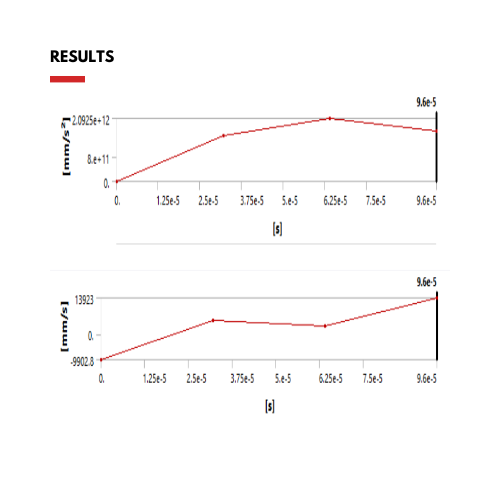
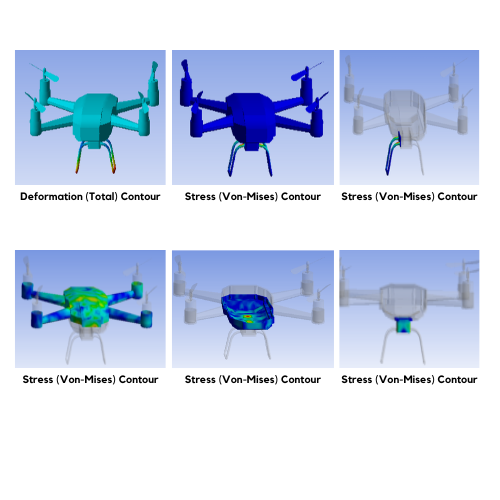
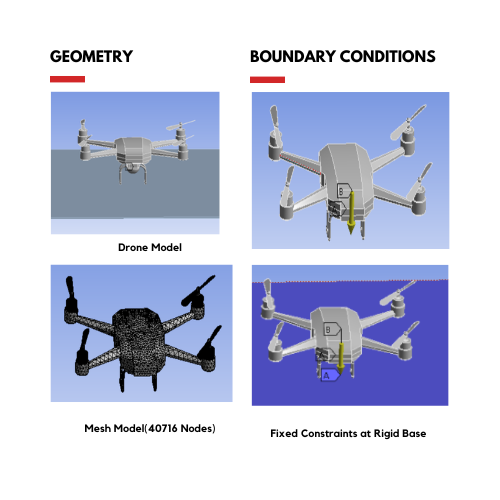
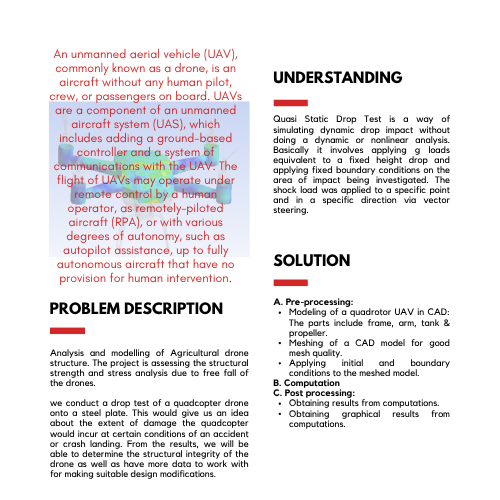
Drop Test Simulation
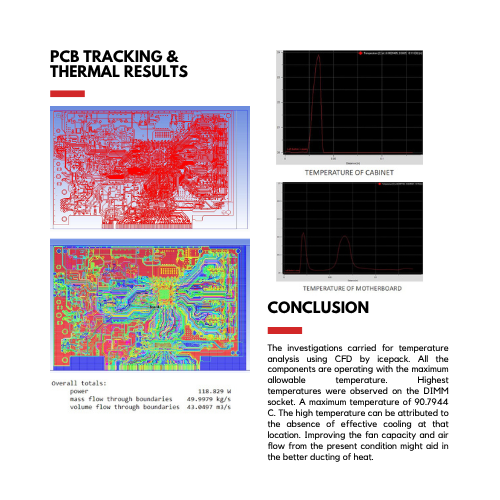
Thermal Analysis Prep
PCB and PCBA Materials
Trace & Via Capture
Locked IP Model
Over One Million Part Library
Shock/Vibration/Thermal Cycling Analysis
Crack & Fracture Modeling
Default Package Geometries
Ansys Workbench Integration
1-D/3-D Solder Failure Predictions
Fatigue Life Analysis
Capabilities
Design for Reliability From the Very Start of your Project
Electrical, mechanical, and reliability engineers can work in tandem to implement design best practices, predict product lifetimes and reduce failure risks.
Sherlock reduces expensive build-and-test iterations by virtually running thermal cycling, power-temperature cycling, vibration, shock, bending, thermal derating, accelerated life, natural frequency, and CAF to adjust designs in near real-time and achieve qualification in one round. In post-processing simulation results from Icepak and Mechanical, and LS-DYNA, Sherlock can predict test success and estimate warranty return rates. Icepak, Mechanical, and LS-DYNA users are more efficient by directly connecting simulation to material and manufacturing costs.
Capabilities
Key Features
Unlike any other tool on the market, Sherlock uses files created by your design team to build 3D models of electronic assemblies for trace modeling, post-processing, and reliability predictions. This early insight immediately identifies areas of concern and allows you to adjust and retest designs quickly.
Reliability Predictions
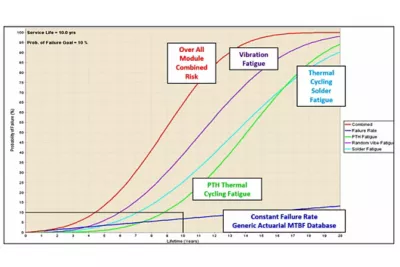
Reliability Predictions Sherlock’s post-processor determines time to failure with a complete and comprehensive lifetime curve—reducing the number of required physical testing iterations and improving the chances that prototypes will pass qualification tests in the first round.
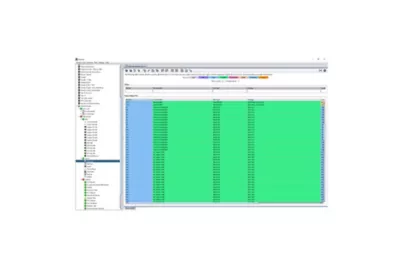
Sherlock’s post-processing tool includes reporting and recommendations, a lifetime curve graph, red-yellow-green risk indicators, tabular display, graphic overlay, pinned results based on reliability goals, automated report generation and a locked IP model for review by suppliers and customers.
PCB Modeling
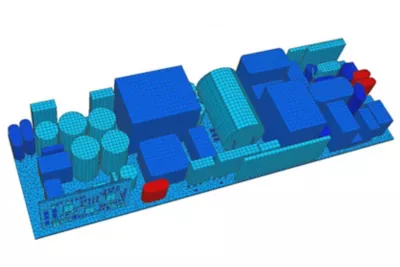
PCB Modeling With its extensive parts and materials libraries (part, package, materials, solder, laminate and more), Sherlock automatically identifies your files and imports your parts list. It then builds a 3D finite element analysis (FEA) model of your circuit board in minutes.
Sherlock’s powerful parsing engine (capable of importing Gerber, ODB++ and IPC-2581 files, etc.) and embedded libraries (containing over 600,000 parts) automatically builds box-level FEA models with accurate material properties—reducing pre-processing time from days to minutes.
ECAD to CAE
ECAD to CAE Sherlock is the leading industry tool for converting a range of ECAD files into simulation-ready finite element models, with the following features:
- Captures stackup from output files (Gerber, ODB++, IPC-2581)
- Automatically calculates weight, density and in-plane and out-of-plane modulus, coefficient of thermal expansion and thermal conductivity
- Allows the user to explicitly model all PCB features (such as traces and vias) over the entire circuit board or in a region using either 1D/2D reinforcements or 3D solids
- Captures over 40 different part and package parameters using the embedded parts/package/material libraries
- Geometry with material properties can be exported for current density (SIwave), thermal (Icepak) or structural (Mechanical) analysis
Failure Analysis
Failure Analysis Utilizing Physics of Failure and Reliability Physics techniques, Sherlock accurately predicts the failure behavior of electronic hardware and components, providing users with actionable results to optimize their product designs.
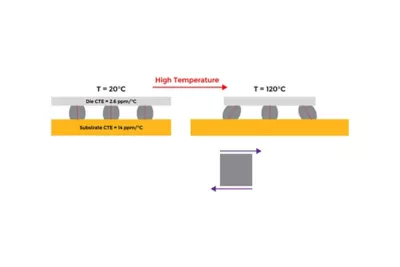
Physics of Failure (PoF), or Reliability Physics, uses degradation algorithms that describe how physical, chemical, mechanical, thermal or electrical mechanisms can decline over time and eventually induce failure. Sherlock uses these algorithms to assess thermal cycling, mechanical shock, natural frequency, harmonic vibration, random vibration, bending, integrated circuit/semiconductor wear-out, thermal derating, conductive anodic filament (CAF) qualification and more.
Thermal Reliability
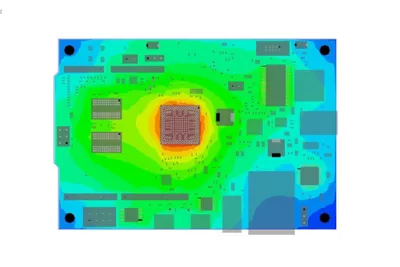
Thermal Reliability Sherlock predicts thermal failure rate and end of life for multiple part technologies as a function of ambient temperature, temperature rise due to power dissipation, and electrical loads.
Aging and wear-out of integrated circuits are captured through acceleration transforms for electromigration, time-dependent dielectric breakdown, hot carrier injection and negative bias temperature instability. Supplier-specific time to failure predictions for aluminum liquid electrolytic capacitors and ceramic capacitors (MLCC) is provided. Finally, Sherlock automates the thermal derating process and flags devices being used outside of the specified operation or storage temperature range.
Solder Fatigue
Solder Fatigue Sherlock provides users ultimate flexibility in predicting solder fatigue behavior. The software’s fully validated 1D solder model predicts solder fatigue reliability under thermomechanical and mechanical environments for all electronic parts (die attach, BGA, QFN, TSOP, chip resistor, through hole, etc.).
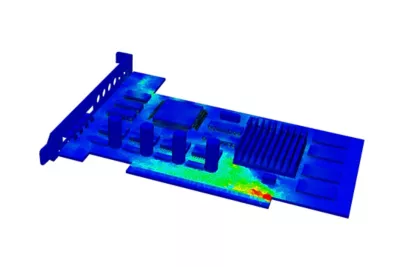
Sherlock’s Thermal-Mech capability incorporates the effect of system-level mechanical elements (chassis, module, housing, connectors, etc.) on solder fatigue analysis by capturing complex, mixed mode loading conditions. Sherlock also supports the use of Darveaux or Syed models in Ansys Mechanical by pushing simulation-ready models of BGA, CSP, SiP, and 2.5D/3D packaging.
Mechanical Parts
Mechanical Parts Sherlock’s intuitive user interface allows even the beginner user to add additional features to their PCBA model before simulation.
This includes our heatsink editor, where users can create pin- and fin-based heatsinks using fill-in fields and drop-down menus and attach them to components or PCBs. Users can also add a wide variety of conformal coatings, potting compounds, underfills, and staking adhesives so the FEA model best represents the real world.
Visioneering
Recent Events &
Webinars
Discover how engineering simulation is expanding across the entire product lifecycle.
Ansys Multiphysics
Conference
Join us on Saturday, June 10th, 2023, at 3 PM. The event will take place at Riverside Park, 123 River Lane, Springfield.
Blog
Future Tech Expo 2025
Join us on Saturday, June 10th, 2023, at 3 PM. The event will take place at Riverside Park, 123 River Lane, Springfield.
Blog
Innovative Simulations
Summit 2025
Join us on Saturday, June 10th, 2023, at 3 PM. The event will take place at Riverside Park, 123 River Lane, Springfield.
Innovative Simulations
Summit 2025
Join us on Saturday, June 10th, 2023, at 3 PM. The event will take place at Riverside Park, 123 River Lane, Springfield.
Ansys Multiphysics
Conference
Join us on Saturday, June 10th, 2023, at 3 PM. The event will take place at Riverside Park, 123 River Lane, Springfield.
Blog
Innovative Simulations
Summit 2025
Join us on Saturday, June 10th, 2023, at 3 PM. The event will take place at Riverside Park, 123 River Lane, Springfield.
Study
Case
Explore Case Studies
Download Case Study
Innovate
Events &
white paper
Discover how engineering simulation is expanding across the entire product lifecycle.
Smart Strategies for Large Structural Simulations
One way to gauge the progress of engineering simulation software is through the lens of size. Engineers today routinely run structural simulations with a few million degrees of freedom, and the largest commercial structural simulations have topped even 100 million degrees of freedom.
Many Indian engineering organizations start simulation with one software license and one engineer. As adoption grows, simulation becomes an organizational capability rather than an individual
India’s aerospace and defence sector is increasingly focused on indigenous development, advanced manufacturing, propulsion, electronics and system-level engineering. Simulation can significantly reduce development risk because
Engineering companies across India are increasingly using simulation earlier in the product-development cycle to reduce physical prototyping, improve product quality, accelerate validation and shorten engineering
Visioneering
Blogs & Trends
Discover how engineering simulation is expanding across the entire product lifecycle. engineering / product design analysis by modeling & simulation.

How to Build an Internal CAE Capability in India: Software, Training, Support, HPC and Resources
Many Indian engineering organizations start simulation with one software license and one engineer. As adoption grows, simulation becomes an organizational

Aerospace and Defence Simulation in India: FEA, CFD, LS-DYNA and Electromagnetics
India’s aerospace and defence sector is increasingly focused on indigenous development, advanced manufacturing, propulsion, electronics and system-level engineering. Simulation can

Best Ansys Software Engineering Companies in India: Product Selection Guide
Engineering companies across India are increasingly using simulation earlier in the product-development cycle to reduce physical prototyping, improve product quality,

Transform Ideas into Reality—Explore Our Simulation Solutions Today!
Partner with Us to Revolutionize Engineering Excellence!
Testimonials
Customer Testimonials
MD and Creator - Australian-based green tech company
Manager – HR, P2P Analysis & Solutions
R&D Manager, Bengal Industries Pvt. Ltd.
Technical Director, Bliss Anand Pvt. Ltd.
Chairman and Managing Director, Shubham Flexible Packaging Machines Pvt. Ltd.
Professor and Head, Department of Mechanical Engineering, CUET
Site Manager, Entecnia Consulting
Head of Design & Engineering, Flovel Energy Pvt. Ltd.
Director and Co-Founder, IoTechWorld Avigation Pvt. Ltd.
Head of Operations, Karman Drones Pvt. Ltd.
Associate Principal – Mechanical, Khatib & Alami Engineering Consultants Pvt. Ltd.
Director, Envirotech Systems Limited
Chief Technology Officer, Mittal Electronics
R&D Manager, MV Electrosystems Pvt. Ltd.
Professor, National Institute of Technology Srinagar
“Even with demanding deadlines, we could depend on their team for detailed FEA of our automotive assemblies. Their engineers listened to our requirements and brought the software expertise needed to keep development moving.”
R&D Manager, NTF (India) Pvt. Ltd.
R&D Manager, Nicotra India Pvt. Ltd.
Department Manager, Onassis Auto Limited